Vastu for Balcony: Ideal Direction, Plants and Seating
A balcony connects indoor rooms with outdoor air, daylight, and nature. This guide explains directional preferences, seating layouts, plant selections, and practical non-structural remedies for your home balcony.
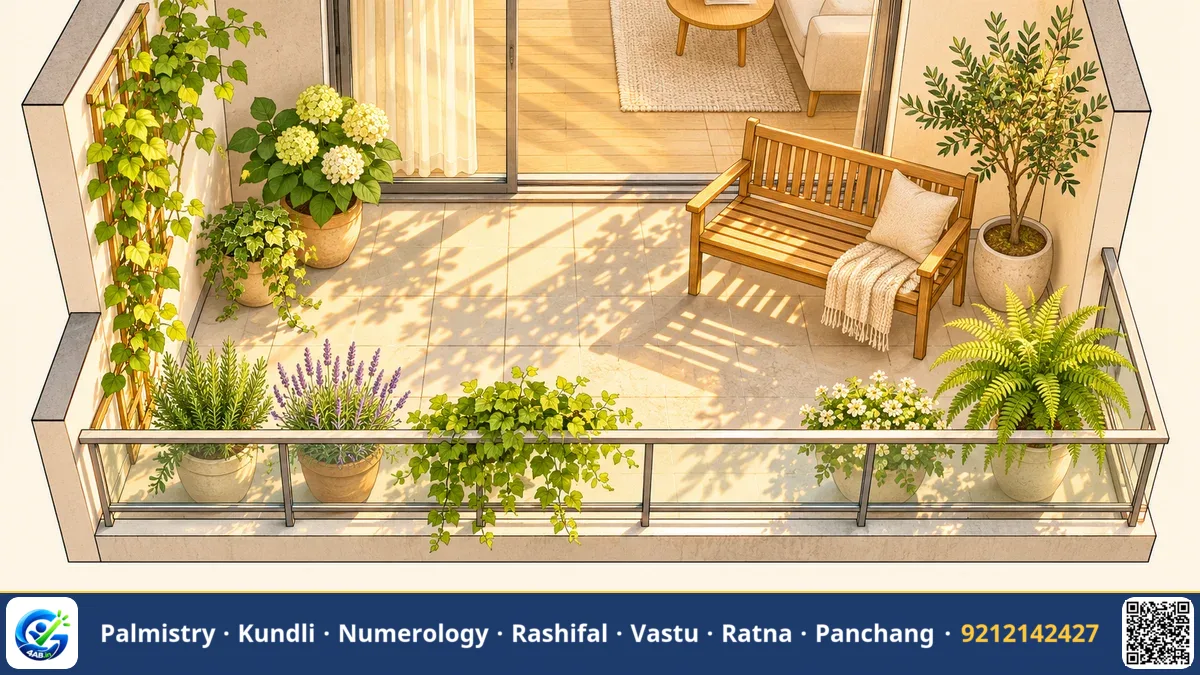
Ideal balcony directions and the logic behind them
Vastu Shastra is the traditional Indian philosophy of orienting a dwelling or workplace to light, air, and direction. The Sanskrit word vāstu means a dwelling or site, derived from the root vas, meaning to dwell or reside. Applied to homes, this design philosophy seeks harmony between living spaces and natural elements like solar movement, wind currents, and directional forces.
In traditional planning, balconies facing north, east, and north-east receive preference based on solar movement and climate conditions:
- North-east (Ishaan corner): Covering the compass bearing from 22.5° to 67.5°, this sector is traditionally kept light and open. Named after the deity Ishana, it connects with water and reflection, catching dawn light without accumulating afternoon heat.
- East: An east-facing balcony welcomes gentle morning sunlight into living quarters, brightening the home and supporting natural daily rhythms.
- North: The northern direction receives steady daylight throughout the day without direct glare, keeping the balcony naturally bright and cool.
- South and west: Balconies in these quadrants face intense afternoon heat, raising indoor temperatures and cooling demands.
To check your balcony orientation, stand at the doorway facing outward with a phone compass to read your exact bearing in degrees from 0–360. The Direction & Placement Finder tool lets you set an entrance bearing and check alignments on the Vastu Purusha Mandala. If your balcony faces south or west, tradition notes that it simply differs from the classic preference, which is common in modern apartment layouts.
| Balcony Direction | Traditional Preference | Solar and Wind Logic | Practical Balcony Treatment |
|---|---|---|---|
| North-East (Ishaan) | Highly preferred | Welcomes gentle morning light; remains cool in afternoon | Keep open and low; avoid heavy furniture |
| East | Preferred | Brings direct early sunlight and fresh morning airflow | Use light seating and small flowering plants |
| North | Preferred | Provides steady daylight without heat build-up | Ideal for reading corners and light greenery |
| South | Differs from preference | Receives strong midday sun, trapping heat in walls | Place heavy planters, timber seating, and sun blinds |
| West | Differs from preference | Exposed to harsh afternoon rays and evening warmth | Install roll-up screens, leafy pots, and sturdy benches |
Arranging seating and furniture in your balcony
Balcony seating should support comfort while maintaining physical balance. Traditional space planning assigns heavier weight to south and west sectors, leaving north and east sectors open and unburdened.
Position primary seating against the southern or western wall. This includes wooden armchairs, stone benches, or a swing (jhula). Placing substantial pieces in these zones anchors the space while leaving northern and eastern railings open for daylight and breeze.
Orientation while seated is equally important. Arrange chairs so you face north or east when seated. Facing north or east allows you to look toward incoming morning light and fresh air. It is traditionally held (माना जाता है) that facing these directions during morning relaxation fosters a calm and focused state of mind.
Select natural materials such as solid wood, cane, wicker, or bamboo rather than massive synthetic units. Avoid oversized furniture that blocks narrow walkways. Keep the central zone, known in traditional space planning as the Brahmasthan or central clearing, free from clutter. Ensure furniture is movable rather than cast in concrete, allowing regular cleaning underneath.
Choosing and placing plants for light and air
Plants bring nature into an urban home, but their placement must respect sunlight levels and drainage. Placing potted greenery carelessly can block fresh air or cause moisture issues.
For north and east balconies, choose small containers and low-growing vegetation. Sacred basil (tulsi) is traditionally held to be an auspicious and air-purifying plant that thrives in gentle morning sunshine. Alongside tulsi, you can grow culinary herbs like mint and coriander, as well as flowering varieties like jasmine and marigold. These varieties remain compact, emit gentle fragrances, and do not block daylight.
For south and west balconies, taller and bushier plants are suitable. Choose sturdy terracotta pots with foliage such as palms, money plants on moss poles, and rubber plants. These leafy plants absorb harsh afternoon heat and serve as a living thermal buffer, cooling the air before it reaches the interior.
Avoid thorny plants like cacti on domestic balconies because they collect dust and pose minor scratch risks. Place saucers under pots to catch drainage water and prevent floor stains. Ensure the floor slopes gently toward the outlet to prevent stagnant pools, and clear away dried foliage regularly.
Balcony colours, lighting, and non-structural remedies
Vastu Shastra is a traditional cultural practice and design philosophy, not architectural or structural engineering. Traditional adjustments never require breaking walls or altering building frameworks. Any structural change belongs strictly with a licensed architect or structural engineer. Homeowners can improve their living environment through low-cost, non-structural remedies like colour, lighting, and placement.
Wall colours influence how natural light reflects indoors. For north- and east-facing balconies, light shades such as off-white, cream, soft green, or pale blue reflect morning daylight into connected rooms. For south- or west-facing balconies, muted tones like beige, sand, or warm clay soften intense afternoon glare.
Lighting should be warm, soft, and functional. Intense spotlights produce harsh shadows and make a relaxation space feel uninviting. Instead, install warm yellow fixtures at eye level. A simple pendant lantern or solar light creates pleasant evening ambiance without creating glare.
If your balcony orientation differs from traditional preference, use practical non-structural remedies. Install roll-up bamboo blinds on south- or west-facing railings to filter intense afternoon heat. Place heavier clay planters along the south-western edge to anchor that sector. Keep the north-east corner clear of storage boxes, discarded mops, and broken items. A small metal or bamboo wind chime hung where breezes pass adds pleasant acoustic movement.
Key takeaways
- Balconies facing north, east, or north-east provide optimal morning light, good ventilation, and a cool afternoon environment.
- Place heavy seating and swings along south and west walls, keeping chairs positioned so you face north or east.
- Grow small herbs and tulsi on north and east balconies, while using dense foliage on south and west balconies to block heat.
- Use soft pastel wall colours, warm evening lighting, and bamboo blinds as effective non-structural remedies without demolition.
Frequently asked questions
Can I place a swing on my balcony according to Vastu?
Yes. A swing or jhula is suitable for a balcony when placed along the southern or western wall. Position it so that when you sit, you face north or east. Choose wood or cane rather than bulky iron frames to keep the installation practical and easy to maintain.
Which plants are traditionally recommended for an east-facing balcony?
East-facing balconies receive bright morning sunlight, making them ideal for sacred basil (tulsi), jasmine, mint, and marigold. Keep containers small and lightweight so they do not block incoming sunlight and airflow into your living room.
What can I do if my apartment only has a south-facing balcony?
A south-facing balcony simply differs from traditional preference and does not require structural alterations. Use bamboo blinds or roll-up shades to filter direct afternoon heat, place heavier terracotta planters along the railing, and paint surrounding walls in neutral sand or beige tones.
What to do next. Try it yourself on the page below.
Vastu Shastra — Directions, Rooms & Remedies →