Gochar explained: how planetary transits interact with a kundli
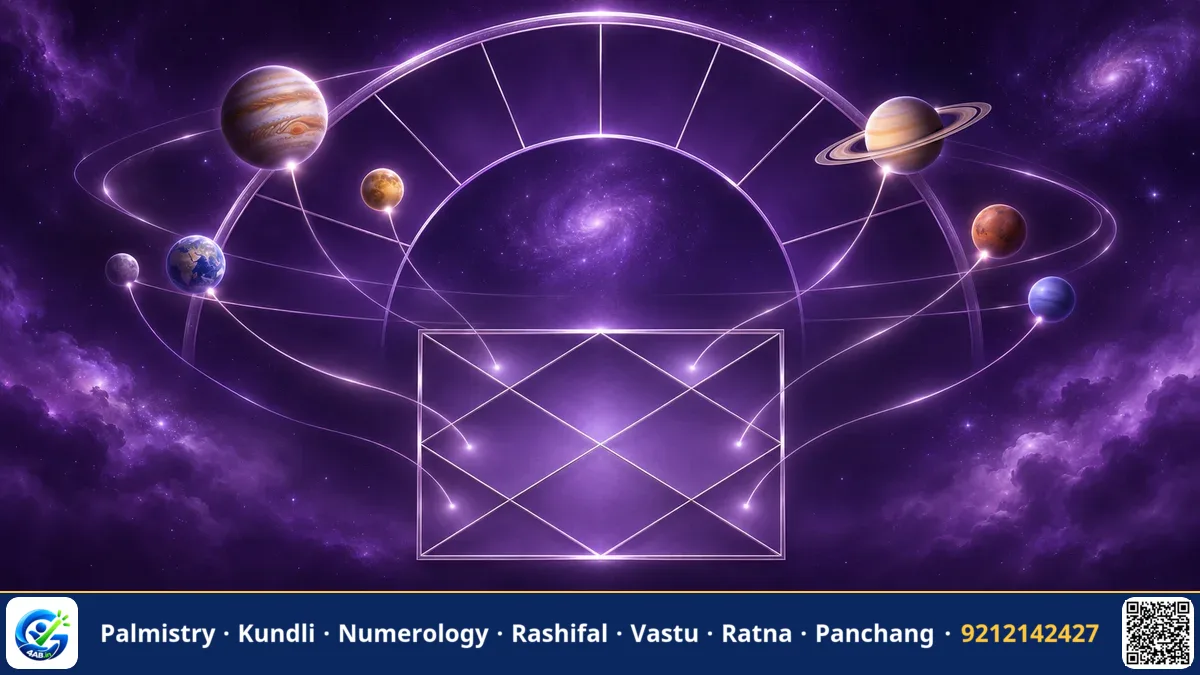
This post explains what gochar means and how it connects to your birth chart.
You will also learn how to look at the live transits in your Janam Kundli report.
What gochar means and what you need first
Gochar is the Sanskrit word for transit. It means the planets as they move through the sky now. Planets keep passing through the twelve rashis (zodiac signs) all the time.
Your natal chart is different. It is a snapshot of the sky at your exact time and place of birth. It never changes. Gochar is the live sky, and it keeps changing. Vedic astrology reads how the moving layer touches the fixed one.
Before you read any transit, check two things.
- A correct birth chart. This needs your date, exact time and place of birth. If the birth time is off, the lagna (rising sign) can change, and then the houses change too.
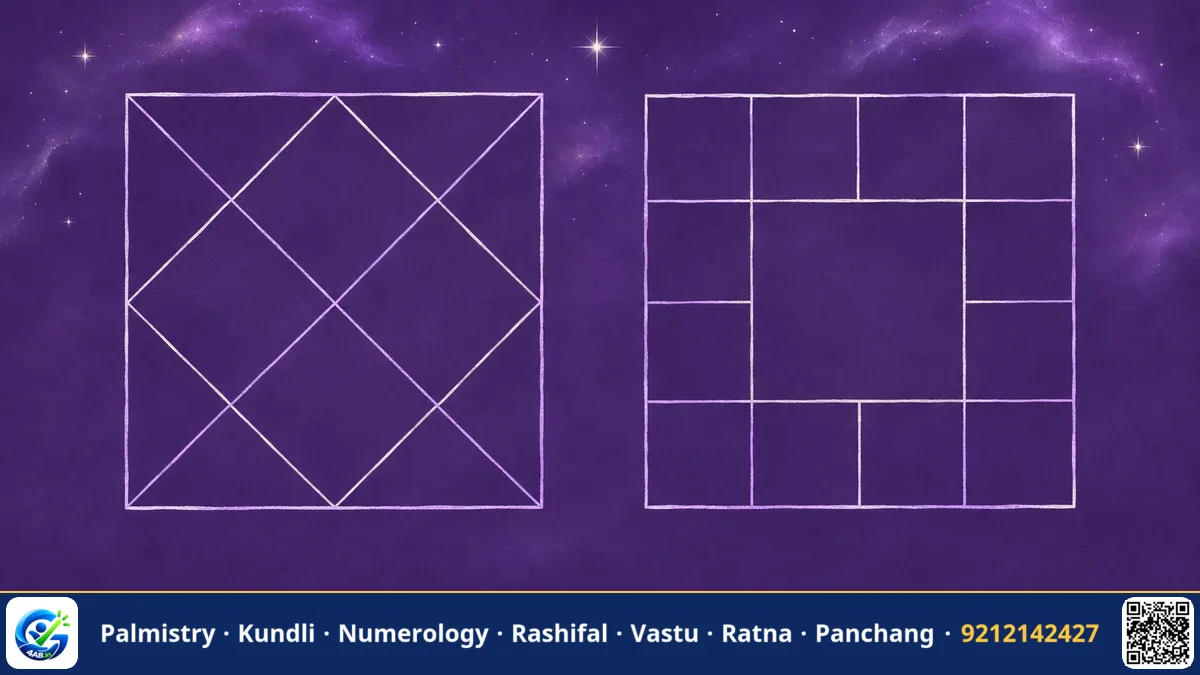
- The system used. The free Janam Kundli on this site builds a sidereal chart with the Lahiri ayanamsa and uses whole-sign houses. The ayanamsa is the correction that links the sidereal zodiac to the seasonal one. In whole-sign houses, each sign is one full house.
Why does this matter? A transit is always described by the house or sign it occupies in your chart. If another system places the same planet in a different sign, the reading changes. Always check the system before you compare two reports.
How a transit meets your chart
Traditionally, two questions are asked about a transiting planet.
- Which house of your chart is it passing through? The house names the area of life that is touched, such as home, work or learning.
- Is it touching a natal planet? A transit over a planet in your birth chart is traditionally held to bring that planet's themes forward.
Many teachers also count houses from the natal Moon sign, not only from the lagna. This Moon-based view is very common in gochar reading. As a beginner, simply know that both views exist, and ask which one a report uses.
A simple example (for learning only):
Suppose your lagna is Taurus. In whole-sign houses, Taurus is house 1. The next sign in the zodiac is house 2, the one after that is house 3, and so on. If a slow planet is now passing through the sign that is house 2, it is transiting your 2nd house. You would then read the themes of that house, traditionally family and speech, in the light of that planet. This is a method of reading. It is not a promise of any result.
Fast planets and slow planets
Not all transits carry equal weight. Planets move at very different speeds.
| Type | Planets | How it is usually read |
|---|---|---|
| Fast | Moon, Sun, Mercury, Venus, Mars | Short-lived moods and small events. The Moon changes sign in about two to three days. |
| Slow | Jupiter, Saturn | Long phases that last many months to years |
| Nodes | Rahu, Ketu | Long phases. They always sit opposite each other. |
Give more attention to the slow planets first. Saturn, Jupiter, Rahu and Ketu set the larger background. The fast planets only add small changes on top of it. When you read a transit, ask first about the slow planets, and only then about the quick ones.
Gochar and dasha work together
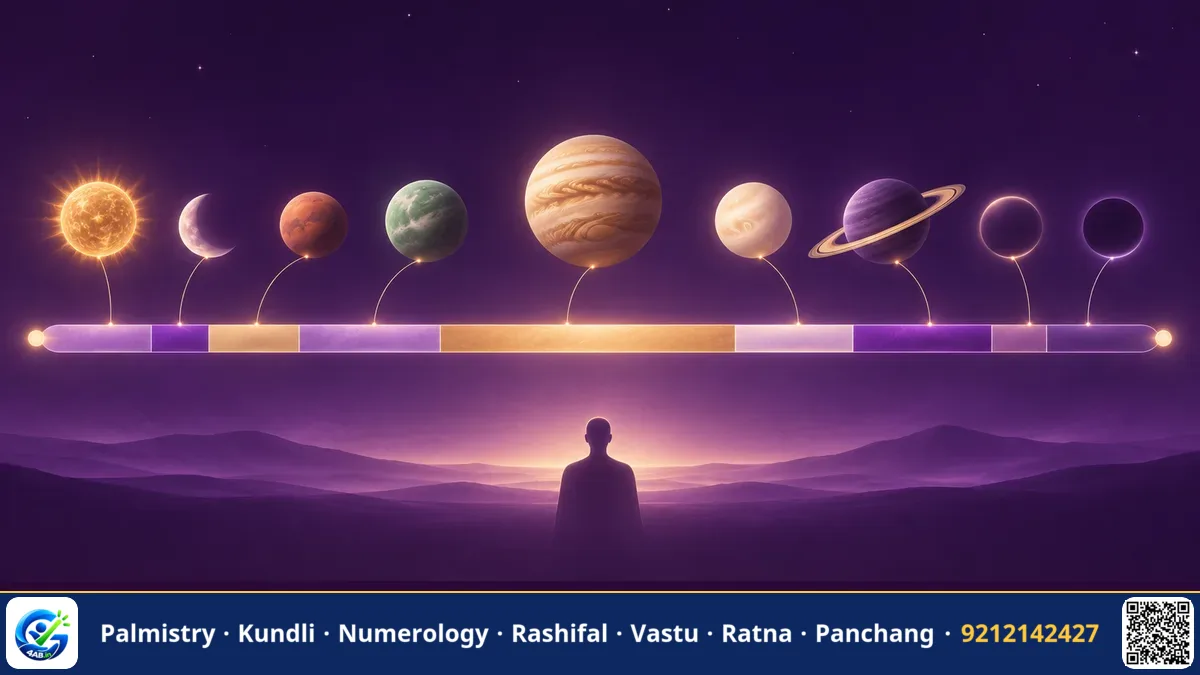
Gochar is not read alone in the traditional method. It is read with the dasha, a planetary time period worked out from your birth chart. The Vimshottari dasha is a 120-year cycle, and each planet rules a fixed number of years in it.
| Planet | Years in the cycle |
|---|---|
| Ketu | 7 |
| Venus | 20 |
| Sun | 6 |
| Moon | 10 |
| Mars | 7 |
| Rahu | 18 |
| Jupiter | 16 |
| Saturn | 19 |
| Mercury | 17 |
Your first dasha is ruled by the lord of the Moon's nakshatra at birth. A simple way to hold the three layers together:
- The natal chart shows what is possible.
- The dasha shows which planet's themes are in focus at this stage of life.
- Gochar shows which house and which planet the sky is touching today.
It is traditionally held that a transit matters more when it connects with the planet of your running dasha. Your Janam Kundli report shows the dasha timeline and the live transits, so you can look at them side by side.
Sade Sati is a well-known gochar topic. It refers to the period when Saturn passes through the sign before your natal Moon sign, then the Moon sign itself, then the sign after it. Many people find the word frightening. This site explains such topics as classical indications with their cancellation conditions, never as fear and never as guaranteed outcomes. The live transits in the report include Sade Sati, so you can check calmly whether it applies to your chart. A label is not a verdict.
Using the live transits in your Janam Kundli report
- Open the free Janam Kundli page and enter your date of birth, exact time of birth and place of birth.
- The PIN code is optional. It only helps the page find the place.
- Press Generate Kundli.
- Look at the Overview and Planets tabs first, so you know your lagna and Moon sign.
- Open the Transits tab. It shows the live transits over your chart.
- Note the house of each slow planet before the fast ones.
- Open the Dasha tab and note your running mahadasha and antardasha.
- Write two short lines in a notebook: where Saturn is now, and which planet rules your dasha. Look at the note again after a few months to see how your own understanding grows.
The report is composed from your actual chart data, with the assumptions shown. Still, treat the reading as a guide for reflection. Do not use it to take big financial, health or legal decisions. For those, speak to a qualified professional.
Watch for these common beginner mistakes:
- Reading one planet alone. A single transit tells you little. Look at the house, the natal planets it touches and the dasha.
- Using a wrong birth time. Even a small error can move the lagna.
- Mixing systems. A sidereal report and a tropical one will often show different signs for the same planet.
- Fearing a label. Terms like Sade Sati describe a traditional pattern. They are not a sentence.
Key takeaways
- Gochar is the live movement of planets. The natal chart is the fixed base.
- Read the house a planet is in, and any natal planet it touches.
- Give more weight to slow planets such as Saturn and Jupiter.
- Read gochar together with the dasha, not on its own.
- Astrology is a traditional, belief-based system. Use it for reflection, not as a guarantee.
Frequently asked questions
What is the difference between a natal chart and gochar?
The natal chart is the sky at your birth and stays fixed. Gochar is the sky as it is now. Astrologers read the second against the first.
Do I need my exact birth time to read transits?
Yes, it helps a lot. The report asks for date, exact time and place of birth. A wrong time can change the lagna, and so the house in which a transit falls.
Does the Janam Kundli report show live transits?
Yes. It has a Transits tab with live transits over your chart, including Sade Sati. It also has a Dasha tab, so you can compare both.
Is a Sade Sati period always difficult?
It is traditionally described as a phase with certain themes. This site explains such indications along with their cancellation conditions, and never as a guaranteed outcome.
Can gochar tell me what will happen?
No. Astrology is a traditional, belief-based system and is not scientifically validated. Treat transits as a way to reflect on active themes, not as a prediction of results.
What to do next. Try it yourself on the page below.
Free Kundli — Birth Chart, Dasha, Transits & Analysis →