Hydrogen: Properties, Discovery, Common Uses and Misconceptions
In this guide, you will examine hydrogen using data from its interactive periodic table tile, its historical discovery, and its industrial uses. You will review its tile parameters, correct three common student misconceptions, and work through a practical mole calculation.
Hydrogen on the periodic table tile
Open the interactive periodic table and select the first tile. Tap the hydrogen tile to view its quick-view card curated by Mr. Aniket Bhardwaj. The figures follow IUPAC and CIAAW atomic weights, NIST atomic spectra, and CRC Handbook physical data. You can also open the 17-chapter profile for quantum numbers and a full searchable data sheet.
Study the standard tile values in the data table below:
| Property | Tile value | Significance |
|---|---|---|
| Atomic number | 1 | One proton in the nucleus |
| Chemical symbol | H | Universal chemical shorthand |
| Standard atomic mass | 1.008 | Reference atomic weight |
| Period | 1 | First horizontal row |
| Block | s-block | Single electron in 1s subshell |
| Category | Reactive nonmetal | One of ten standard categories |
| Physical state | Gas | Diatomic molecule (H2) at room conditions |
| Occurrence | Natural | One of 85 naturally occurring elements |
| Ground state energy | −13.6 eV | Principal quantum number n = 1 level |
Use the table controls to filter elements by Category, Block, Period, State, or Natural / synthetic status. Notice that hydrogen is unique: it is the only reactive nonmetal in the s-block of Period 1.
Discovery and the origin of the name
In the 17th century, experimenters produced hydrogen gas by reacting acids with active metals, but early chemists did not recognize it as an independent element.
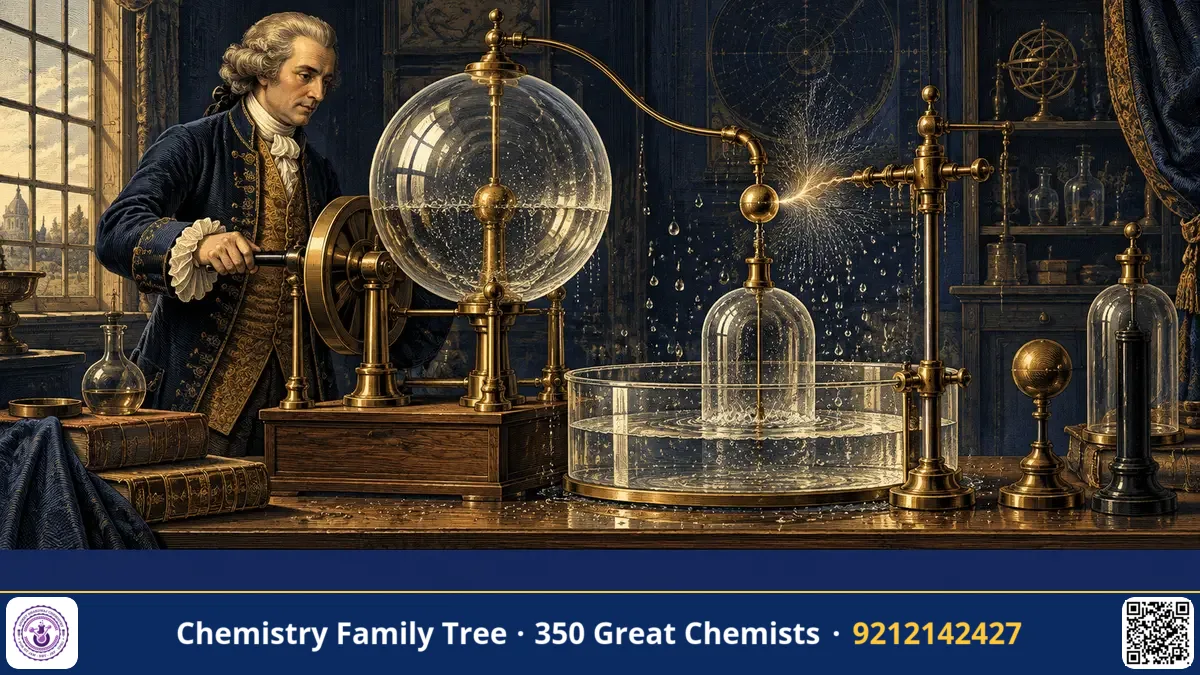
Between 1766 and 1781, Henry Cavendish proved that hydrogen gas is a distinct substance. Cavendish observed that burning this gas in air produces water. This experiment demonstrated that water is a compound rather than an indivisible element.
The name hydrogen comes from Ancient Greek húdōr (water) and gennáō (I bring forth), translating as water-former. Later, studying light absorbed and emitted by hydrogen atoms helped establish modern quantum mechanics and discrete electron energy levels.
Atomic structure and bonding behavior
A neutral hydrogen atom contains one proton and one electron. In its ground state (n = 1), the electron has an energy level of −13.6 electronvolts (eV), equivalent to an ultraviolet photon of roughly 91 nanometers wavelength.
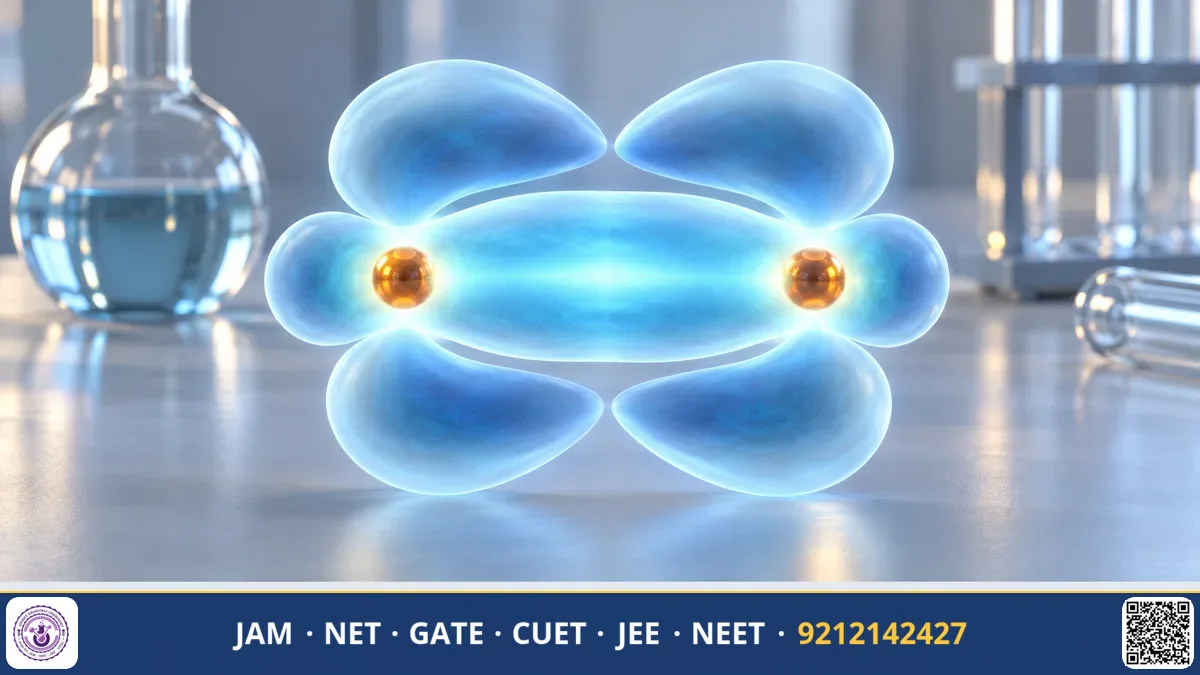
Individual hydrogen atoms do not remain isolated under room conditions. They share electrons to form diatomic molecules with the formula H2, called dihydrogen. Dihydrogen is colorless, odorless, non-toxic, and combustible. It forms covalent bonds with nonmetals to yield water and organic compounds.
Hydrogen also forms two distinct ions depending on reaction conditions:
- Hydron (H+): In acid-base reactions, hydrogen transfers as a positive cation or proton. Hydrons bind to solvent molecules and govern aqueous pH.
- Hydride (H−): In ionic compounds with electropositive metals, hydrogen acts as a negative anion. Hydrides react vigorously with proton sources to yield H2 gas.
Industrial production and practical uses
Hydrogen constitutes about 75% of all normal matter in the universe. Stars and the Sun consist mainly of hydrogen plasma. On Earth, free hydrogen gas is rare, so industry manufactures it from compounds.
Facilities manufacture hydrogen through two main routes:
- Steam reforming of natural gas: Methane reacts with high-temperature steam to produce commercial hydrogen.
- Electrolysis of water or saline: An electric current splits water or saline into hydrogen and oxygen gas.
The resulting hydrogen supplies three major industrial applications:
- Ammonia synthesis: Hydrogen reacts with nitrogen to make ammonia for agricultural fertilizers.
- Fossil fuel processing: Refineries use hydrogen to remove impurities and refine petroleum products.
- Fuel cells: Fuel cells combine hydrogen and oxygen to produce electricity with water as the only byproduct.
Three common misconceptions about hydrogen
Watch for these three conceptual errors in your chemistry studies:
Misconception 1: Hydrogen is an alkali metal because it sits in Group 1. Placing hydrogen above lithium reflects its single valence electron (1s1), but hydrogen is a reactive nonmetal. It does not form a metallic lattice or conduct electricity. With no inner electron shielding, its high ionization energy resembles nonmetals, and it forms covalent bonds.
Misconception 2: All hydrogen atoms contain neutrons. Many students believe every nucleus contains neutrons. The dominant natural isotope, 1H, contains one proton, one electron, and zero neutrons. Neutrons occur only in minor isotopes like deuterium and tritium.
Misconception 3: Elemental hydrogen exists as single atoms at room temperature. Elemental hydrogen at standard conditions exists as diatomic molecules (H2). Isolated H atoms have an unpaired electron. Two atoms share electrons to achieve a stable two-electron duet.
Worked example: calculating moles of dihydrogen gas
Apply tile data to solve numerical problems accurately. In NCERT exercises, students often confuse atomic mass with molecular mass.
Problem: A cylinder contains 5.040 grams of pure hydrogen gas. Using the atomic mass from the periodic table tile, calculate the molar mass of dihydrogen gas and find the quantity in moles.
Step 1: Read the tile atomic mass. The interactive periodic table tile gives Ar(H) = 1.008 g/mol.
Step 2: Determine the molar mass of dihydrogen gas. Hydrogen gas is diatomic (H2). Multiply the atomic mass by two: M = 2 × 1.008 g/mol = 2.016 g/mol.
Step 3: Calculate moles. Divide mass by molar mass: n = 5.040 g / 2.016 g/mol = 2.500 mol.
Teacher advice: Check whether a problem specifies hydrogen atoms or hydrogen gas. For hydrogen gas, always use 2.016 g/mol. Using 1.008 g/mol for H2 gas causes avoidable calculation errors.
Key takeaways
- Hydrogen has atomic number 1, standard atomic mass 1.008, and sits in Period 1 and the s-block as a reactive nonmetal.
- Henry Cavendish identified hydrogen as an independent substance in 1766–1781 and showed that its combustion yields water.
- The ground state energy of hydrogen is −13.6 eV (n = 1), and its primary isotope has one proton, one electron, and no neutrons.
- Major industrial uses include ammonia synthesis for fertilizer, petroleum refining, and fuel cells for clean electricity.
- Hydrogen gas at room conditions is diatomic (H2), requiring a molar mass of 2.016 g/mol in stoichiometric calculations.
Frequently asked questions
Why is hydrogen placed in Period 1 and Group 1?
Hydrogen is in Period 1 because its single electron occupies the first shell (n = 1). It sits above Group 1 due to its 1s1 configuration, though it behaves chemically as a reactive nonmetal.
Who proved that burning hydrogen produces water?
Henry Cavendish proved in 1766–1781 that burning hydrogen produces water. This discovery gave hydrogen its Greek name, meaning water-former.
What is the difference between a hydron and a hydride?
A hydron is the positive cation H+ formed when hydrogen loses an electron in acid-base chemistry. A hydride is the negative anion H− formed when hydrogen gains an electron in metal compounds.
Why does hydrogen gas exist as dihydrogen molecules rather than solitary atoms?
A solitary hydrogen atom has an unpaired electron in its 1s orbital. By sharing electrons in a covalent bond, two atoms form dihydrogen (H2) and achieve a stable two-electron duet.
What to do next. Try it yourself on the page below.
Interactive Periodic Table — All 118 Elements →