Satyanarayan Puja at Home: Vidhi and Samagri Overview
Sri Satyanarayan puja is a revered devotional observance conducted in Hindu households across various regions. Dedicated to Lord Vishnu in his benevolent aspect as Satyanarayan, the embodiment of eternal truth, this worship is traditionally performed during milestones such as housewarmings, weddings, or on auspicious lunar days like Purnima (the full moon). Because rituals differ by region, family tradition, and priest, this overview outlines standard domestic practices. Readers should confirm the exact vidhi (ritual procedure), shubh muhurat (auspicious timing), and samagri (ceremonial supplies) directly with their family elders or designated pandit.
Significance and Common Occasions
The name Satyanarayan unites satya, meaning truth, and narayana, an epithet of Vishnu representing the indwelling supreme consciousness. Performing this ceremony serves as an opportunity for the family to express collective gratitude, encourage truthfulness, and foster domestic harmony.
Households typically observe this puja during:
- Auspicious tithis: Monthly on Purnima, or on solar transition days (Sankranti) across the calendar year.
- Life milestones: Moving into a new residence (griha pravesh), successful academic achievements, marriages, or celebrating a childbirth.
- Periodic devotion: Routine monthly or annual gatherings that bring relatives and neighbors together for collective prayer, storytelling, and prasad distribution.
Families generally consult the Hindu calendar (panchang) with their presiding priest to choose an auspicious day and hour for the ceremony.
Essential Samagri Checklist for the Home Altar
Organizing ceremonial items a day beforehand ensures the ritual proceeds smoothly without disruption. Standard domestic samagri includes:
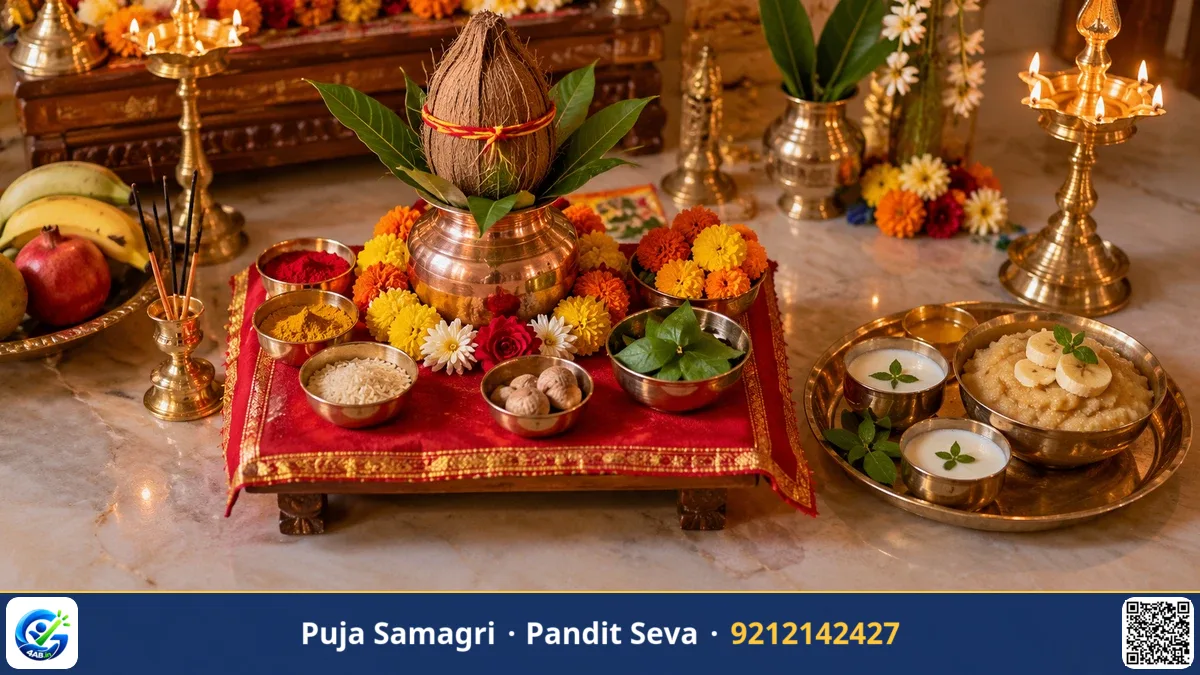
- Altar platform: A clean wooden chauki covered in red or yellow unstitched cotton cloth, often flanked by fresh banana stems or leaves at the corners.
- Sacred representations: A framed portrait or brass idol (murti) of Lord Satyanarayan, accompanied by depictions of Lord Ganesha and Goddess Lakshmi.
- Kalash arrangement: A copper or brass pot filled with clean water or Ganga jal, topped with mango leaves (aam ke patte) and an unbroken husked coconut tied in red thread (moli).
- Ritual powders and grains: Kumkum (vermilion), haldi (turmeric powder), sandalwood paste (chandan), unbroken raw rice (akshat), and sacred basil leaves (tulsi dal).
- Offerings: Fresh betel leaves (paan), whole areca nuts (supari), whole cloves, green cardamom pods, seasonal fresh bananas, and mixed dry fruits.
- Aromatics and lamps: Brass diyas, pure cow ghee, cotton batti, fragrant incense sticks, dhoop, and camphor (kapoor) for the aarti.
- Garlands: Fresh marigold garlands and loose flowers for ceremonial adorning of the altar.
Traditional Prasad: Panchamrit and Sheera
Cleanliness, devotion, and simple traditional ingredients characterize the offerings prepared for the deity. Two main preparations form the sacred bhog:
1. Panchamrit
This sacred drink combines five pure ingredients in a clean brass, silver, or glass bowl:
- Fresh cow milk
- Plain curd (yogurt)
- Desi cow ghee
- Raw honey (madhu)
- Natural sugar or jaggery
A few washed tulsi leaves are placed gently on top to complete and sanctify the preparation before offering.
2. Satyanarayan Sheera
Commonly prepared across northern and western regions, coarse semolina (sooji) or whole wheat flour (atta) is roasted in equal parts desi ghee until aromatic and golden. Warm milk or water, sugar, chopped bananas, and sliced dry fruits are stirred into the pan. In eastern regions, a traditional blend of uncooked wheat flour, fresh milk, mashed ripe bananas, and jaggery called shinni is customarily served.
Families should verify recipe proportions and regional ingredient preferences with their elders or family pandit before cooking.
Step-by-Step Overview of the Puja Vidhi
While the presiding pandit leads the Sanskrit chants, understanding the ritual progression allows everyone present to participate mindfully:
- Shuddhikaran: Purification of the worship space and participants with sanctified water and holy sipping (achaman).
- Sankalp: The host holds water, raw rice grains, a coin, and flowers in the right palm, stating their ancestral lineage (gotra) and the purpose of the prayer.
- Gauri Ganesh Puja: Invocation of Lord Ganesha to remove impediments, alongside Goddess Gauri for well-being and auspiciousness.
- Navagraha and Lokpal Invocation: Homage paid to the nine grahas and the directional guardians for peace in the household.
- Kalash Sthapana: Establishing the sacred water pot upon a bed of grain to invoke divine abundance and sacred river waters.
- Satyanarayan Pujan: Lord Satyanarayan is worshipped through sixteen traditional steps of hospitality (shodashopachara), presenting water, cloth, sacred thread (janeu), chandan, flowers, incense, lamps, and sacred prasad.
The Katha and Aarti: Recitation and Concluding Rites
The recitation of the Satyanarayan Katha from the Skanda Purana forms the contemplative core of the ritual. The narrative is traditionally divided into five chapters, shared by the priest in Sanskrit or the local vernacular.
The parables highlight the moral importance of keeping vows, speaking truth, avoiding arrogance, and remaining humble across fortunes and adversities. Sages, a woodcutter, merchants, and a king illustrate the timeless value of integrity and devotion. Devotees hold rice grains and flower petals during the reading, placing them before the altar at each chapter close.
The ceremony concludes with traditional closing devotional rites:
- Maha Aarti: Waving lighted camphor lamps and ghee wicks while singing devotional hymns in unison.
- Pushpanjali: Offering fragrant blossoms with prayers seeking forgiveness for accidental procedural errors or omissions.
- Prasad Vitaran: Distributing panchamrit and sheera to the priest, elders, family members, and visiting guests, ensuring every attendee partakes before departure.
Helpful Preparation Tips for Hosts
Advance organization helps sustain a serene, focused atmosphere during the worship:
- Consult the pandit early: Clarify language choices, preferred arrival times, and exact samagri needs well ahead of the puja date.
- Comfortable seating: Spread floor mats or rugs for guests, keeping a few chairs near the back for elders who find floor seating difficult.
- Ventilation: Ensure windows or doors remain slightly open to allow lamp and incense smoke to disperse comfortably throughout the room.
- Prasad distribution: Pre-arrange compostable leaf bowls (dona) or paper bags for sharing prasad efficiently with visitors and neighbors.
Key Takeaways
- Sri Satyanarayan puja is a traditional household ritual honoring truth, humility, and family harmony.
- The structure features purification, Ganesha worship, Kalash Sthapana, main deity adoration, and five Katha chapters.
- Essential samagri includes a clean wooden chauki, brass kalash, fresh mango leaves, coconut, panchamrit, and traditional sheera prasad.
- Because procedures and requirements vary across traditions, always confirm details with your pandit or family elders.
This article describes common traditional practice for general education. Customs differ by region, family tradition and priest — please confirm the exact vidhi, muhurat and samagri with your pandit or family elder.