Jupiter as Guru: wisdom, learning and mentors in Vedic astrology

In Vedic astrology, Jupiter is called Guru. This post explains what it is traditionally held to stand for.
You will also learn where to find Jupiter in your own Janam Kundli, and how to read what you see with care.
Why Jupiter is called Guru
The word guru means a teacher, one who leads a student out of darkness into understanding. In Sanskrit, Jupiter carries this same name.
Vedic astrology is called jyotisha. The word comes from a root meaning "light" or a heavenly body. So it fits that the planet of the teacher is linked with the light of understanding.
In the traditional view, the nine planets (grahas) each stand for certain themes in life. A graha is the Sanskrit word for a planet or heavenly body used in a chart. Jupiter's themes are wisdom, learning, teachers, guidance and a sense of what is right.
Remember one point as a beginner. These are symbolic associations that are traditionally held. They are a way of reading a chart. They do not promise what will happen in anyone's life.
What Jupiter traditionally signifies
Here are the main themes people connect with Jupiter. Each one is a traditional association.
- Wisdom: the ability to understand, to judge calmly and to see the larger picture.
- Learning: formal study, higher education and the habit of asking questions.
- Mentors and teachers: the people who guide you, including parents, school teachers and spiritual guides.
- Dharma: a person's sense of duty and right conduct.
- Faith and generosity: trust in a higher purpose and the wish to share what one has.
A useful way to think about it: Jupiter is the planet of why. Other planets may speak of effort or communication. Jupiter is held to speak of meaning and direction.
Jupiter and the idea of a mentor
Many beginners ask why a planet should have anything to do with teachers. The answer lies in how the tradition groups ideas. Each graha is a kind of label for a family of themes. Jupiter's label covers the people and habits that help you grow in understanding.
This is why a student, a parent, a guide and a person who simply gives good advice are all connected with the same planet in traditional reading. The link is about the role they play, not about who they are.
As a teacher, I suggest you use this idea in a practical way. When you see Jupiter in your chart, ask yourself who has guided you so far and what you still wish to learn. The chart gives you the question. Your life gives you the answer.
Where Jupiter sits in your chart
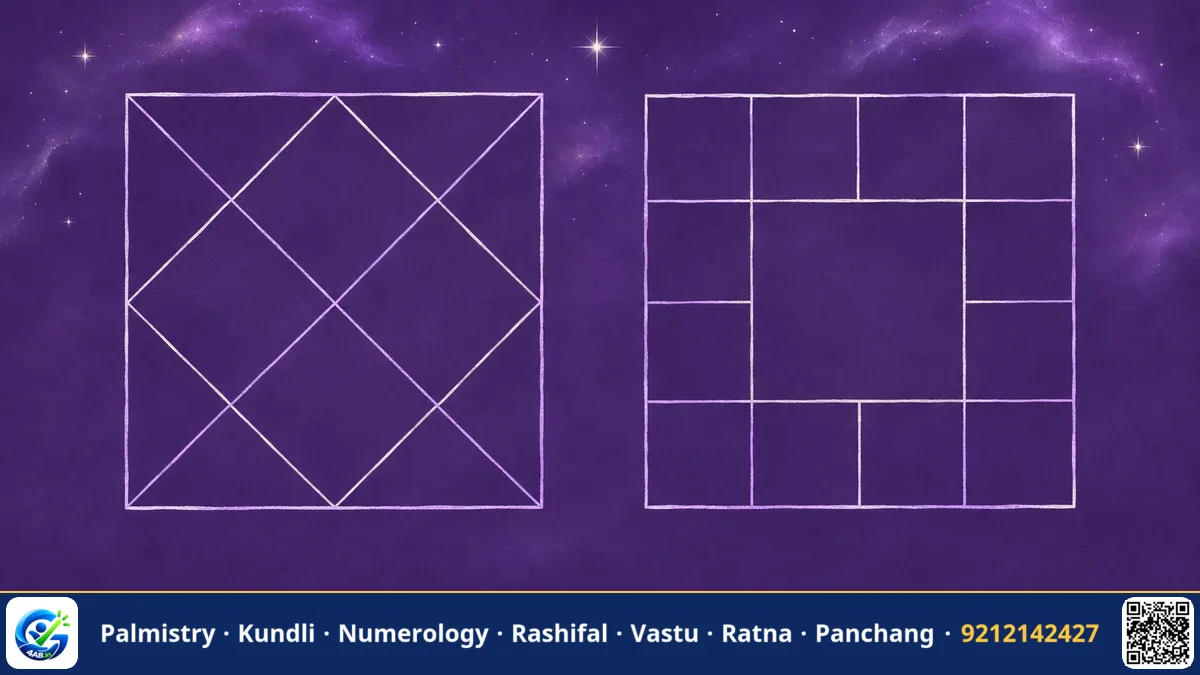
A birth chart shows the position of the planets at your time of birth. Jupiter is read in three ways. First, by its sign, the zodiac sign it occupies. Second, by its house, the area of life that part of the chart represents. Third, by its nakshatra, the lunar mansion it occupies.
Vedic astrology mainly uses the sidereal zodiac. This means an adjustment called the ayanamsa is applied for the slow shift of the equinox. The Janam Kundli tool on this site uses the Lahiri ayanamsa and whole-sign houses. In a whole-sign chart, each house is one full sign.
The table below shows how the same planet is read from three angles. It is a simple guide for beginners.
| What you look at | What it tells you | Example of a question to ask |
|---|---|---|
| Jupiter's sign | The style in which wisdom and learning are approached | Is my learning style practical, curious or reflective? |
| Jupiter's house | The area of life where guidance and learning are traditionally focused | Which part of life do I seek advice about most? |
| Jupiter's nakshatra | A finer shade of its meaning, through the lunar mansion it occupies | What deeper tone does this add? |
A nakshatra is one of the lunar mansions, a division of the zodiac used in Vedic astrology. You do not need to master it today. Just know that it adds detail.
How to look at Jupiter in the Janam Kundli tool
Follow these steps. They take only a few minutes.
- Open the free Janam Kundli page and enter your date of birth, exact time of birth and place of birth. A PIN code is optional and only helps find the place.
- Press Generate Kundli. The tool builds your sidereal birth chart.
- Open the Planets tab. Here the tool gives a planet and house analysis, with a plain explanation for each planet.
- Find Jupiter in the list. Note its sign, its house and its nakshatra.
- Open the Charts tab if you wish to see the same chart drawn in the different styles it offers.
Your exact birth time matters. A small error in time can change the house placement, so check it with a family record if you can.
A simple reading example (illustrative only). Suppose a student's chart shows Jupiter in the fifth house. The fifth house is traditionally linked with study and creativity. A traditional reader may say that guidance and learning are important themes for this person.
What should the student do with this? Treat it as a prompt for reflection. Ask whether you learn best when a mentor is guiding you. Then act on the answer in daily life. The chart does not decide the outcome. Your effort does.
Jupiter and the Vimshottari dasha
Vedic astrology also looks at time. The Vimshottari dasha is a 120-year cycle of planetary periods. Jupiter's period is 16 years in this cycle. The other periods are: Ketu 7, Venus 20, Sun 6, Moon 10, Mars 7, Rahu 18, Saturn 19 and Mercury 17.
Your first dasha is ruled by the lord of the Moon's nakshatra at birth. The Dasha tab of the Janam Kundli tool builds the table for your own chart.
It is traditionally held that during a planet's period, that planet's themes come into focus. So during a Jupiter period, learning, teachers and guidance are the themes to watch. Use this as a prompt to ask what you wish to study or whom you wish to learn from. Do not read it as a fixed promise.
How to read Jupiter with balance
Beginners often make two mistakes. Avoid both.
- Reading one planet alone. Jupiter is only one part of the chart. A reader looks at the whole chart, the houses and the periods together.
- Treating a placement as good or bad news. Classical teaching speaks in indications, along with conditions that can change them. Doshas and remedies on this site are explained as classical indications, never as fear or guaranteed outcomes.
Also keep in mind that astrology is a traditional system of belief and interpretation. The scientific consensus does not treat it as science. Use it as a tool for reflection and cultural understanding. For decisions about health, money, law or career, speak to a qualified professional in that field.
Once you are comfortable with Jupiter, you can explore the other planets one by one. Each has its own traditional themes, and each reads better when you already know how to read one.
Key takeaways
- Jupiter (Guru) is traditionally held to signify wisdom, learning, teachers and guidance.
- Read Jupiter by its sign, house and nakshatra, not by one factor alone.
- In the Janam Kundli tool, the Planets tab gives a plain explanation for each planet.
- Jupiter's Vimshottari dasha lasts 16 years in the 120-year cycle.
- Treat every reading as a traditional indication for reflection, not a promise of results.
Frequently asked questions
Why is Jupiter called Guru in Vedic astrology?
Guru means teacher. Jupiter is traditionally held to represent wisdom, learning and guidance, so it carries the name of the teacher.
Does Jupiter in my chart decide how well I will do in studies?
No. Jupiter's position is a traditional indication about how you approach learning. It does not guarantee marks, admissions or jobs. Your effort and your teachers matter far more.
Where can I see Jupiter in the Janam Kundli tool?
Generate your free kundli and open the Planets tab. It shows planet and house analysis with a plain explanation. Check the sign, house and nakshatra of Jupiter there.
How long is the Jupiter period in the Vimshottari dasha?
It is 16 years within the 120-year Vimshottari cycle. Your first dasha depends on the lord of the Moon's nakshatra at birth. The Dasha tab shows the table for your own chart.
Is it correct to say Jupiter is always good?
That is too simple. The traditional reading depends on the whole chart. Beginners should avoid labelling any placement as purely good or bad.
What to do next. Try it yourself on the page below.
Free Kundli — Birth Chart, Dasha, Transits & Analysis →