Stein, Moore and the structure of ribonuclease
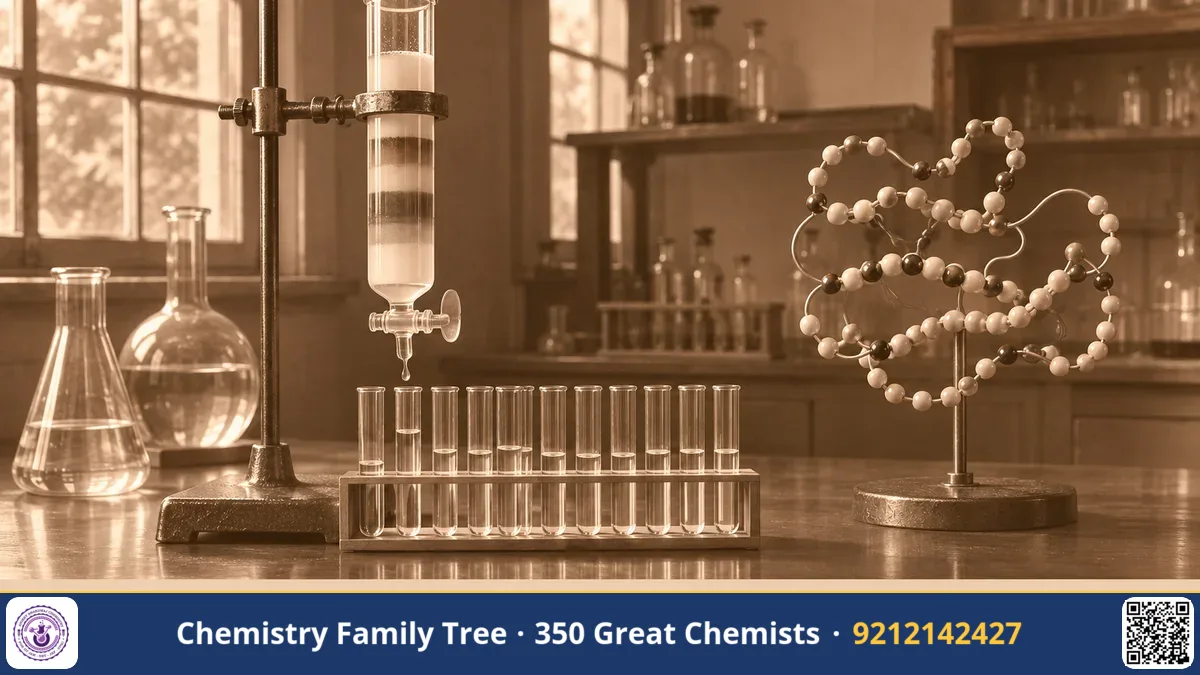
This post explains how column chromatography helped Stein and Moore read the amino acid order of an enzyme.
You will also learn how to reach Stein's biography through the Find a chemist box on our Chemistry Family Tree page.
Why ribonuclease was a good protein to study
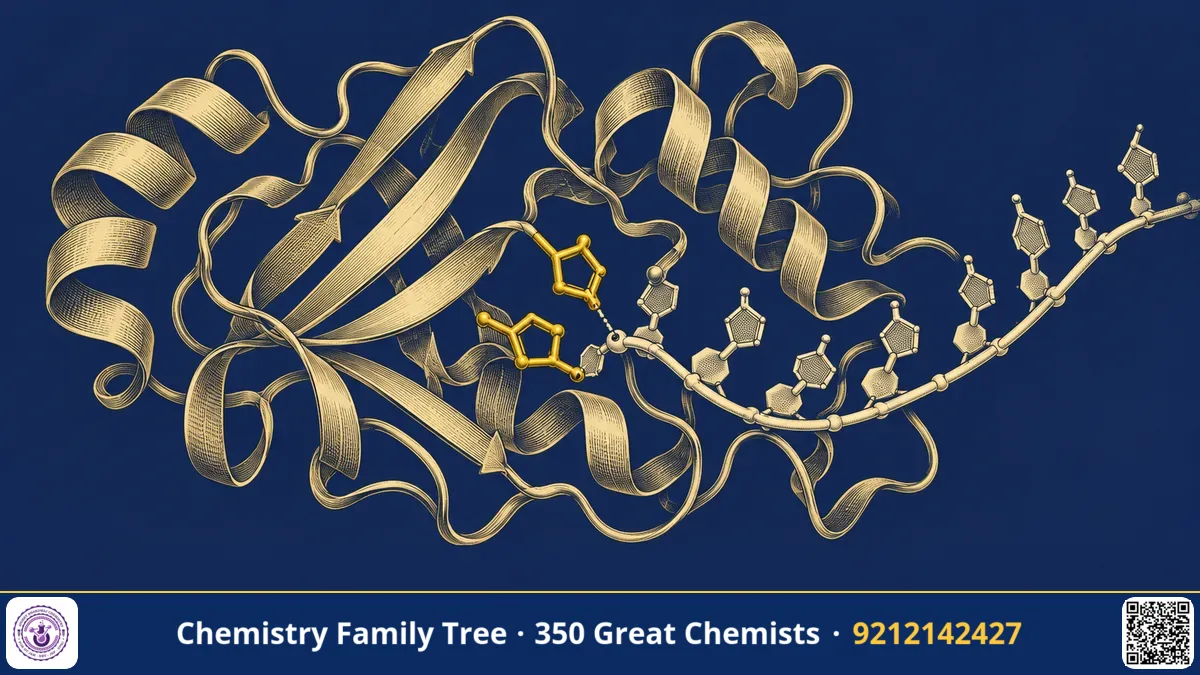
An enzyme is a protein that speeds up a chemical reaction in a living cell. Ribonuclease cuts single-stranded RNA. The form made in the cattle pancreas is called RNase A. It is one of the classic model systems of protein science.
It became a model for two practical reasons. It is extremely stable, and it can be purified in large quantities. A chemist who wants to study a protein needs plenty of pure material. In the 1940s a single large lot of purified enzyme was offered to scientists at low cost, so many laboratories could work on the same sample.
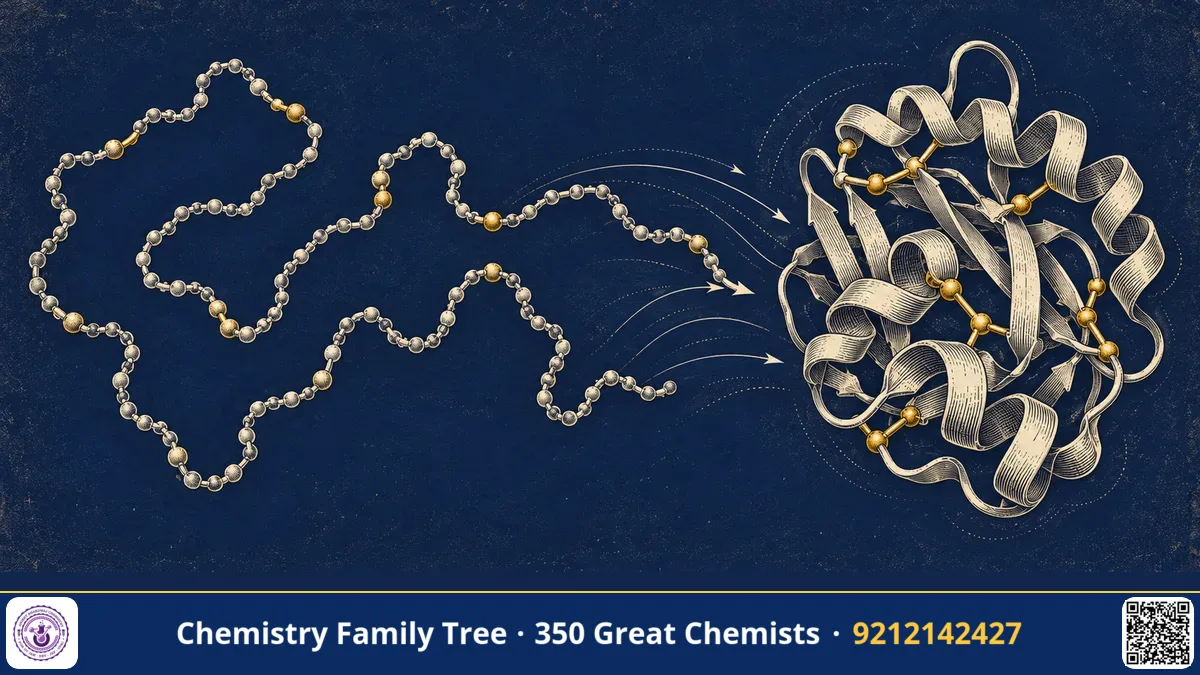
RNase A is also small. It has 124 residues. A residue is one amino acid unit inside a protein chain. Four disulfide bonds help hold the chain in shape. These are sulfur-to-sulfur links between pairs of cysteine residues. A small, stable and plentiful protein was a sensible first target for sequencing.
The problem: reading a protein chain
A protein is a long chain of amino acids. The sequence is the order of those amino acids along the chain. The sequence decides how the chain folds, and the fold decides what the protein does.
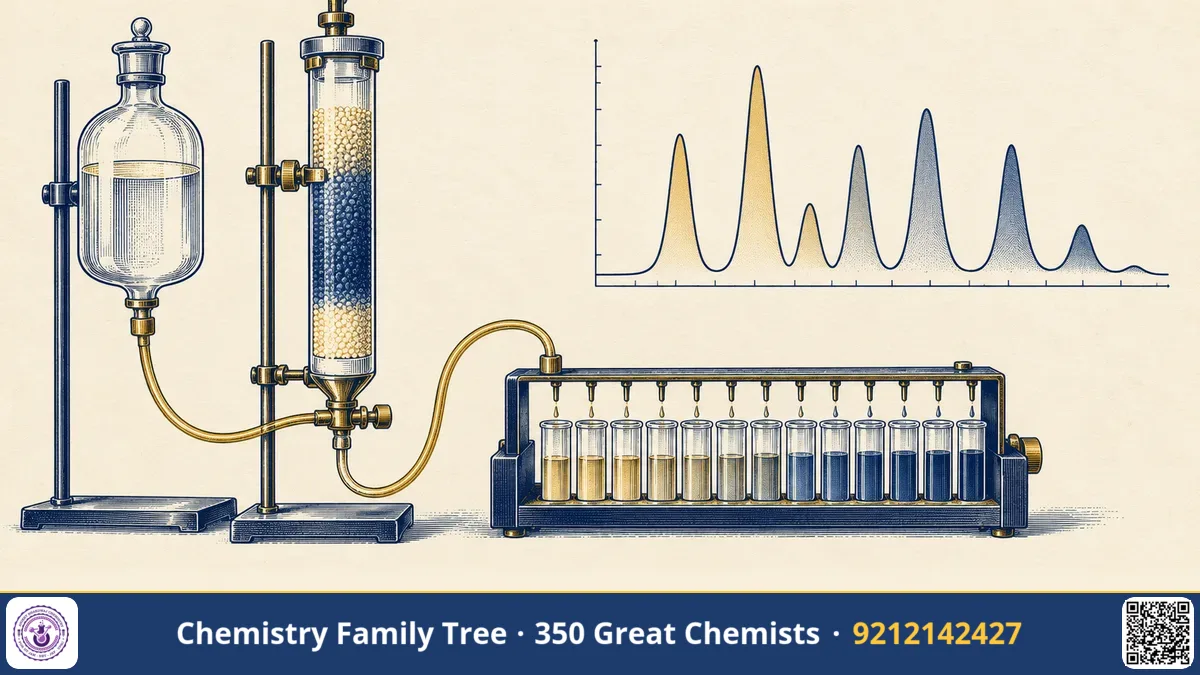
To find a sequence, you break the protein into smaller pieces and then identify the amino acids in each piece. Doing that by hand, again and again, is slow. The 1958 analyzer was meant to take over this repeated work.
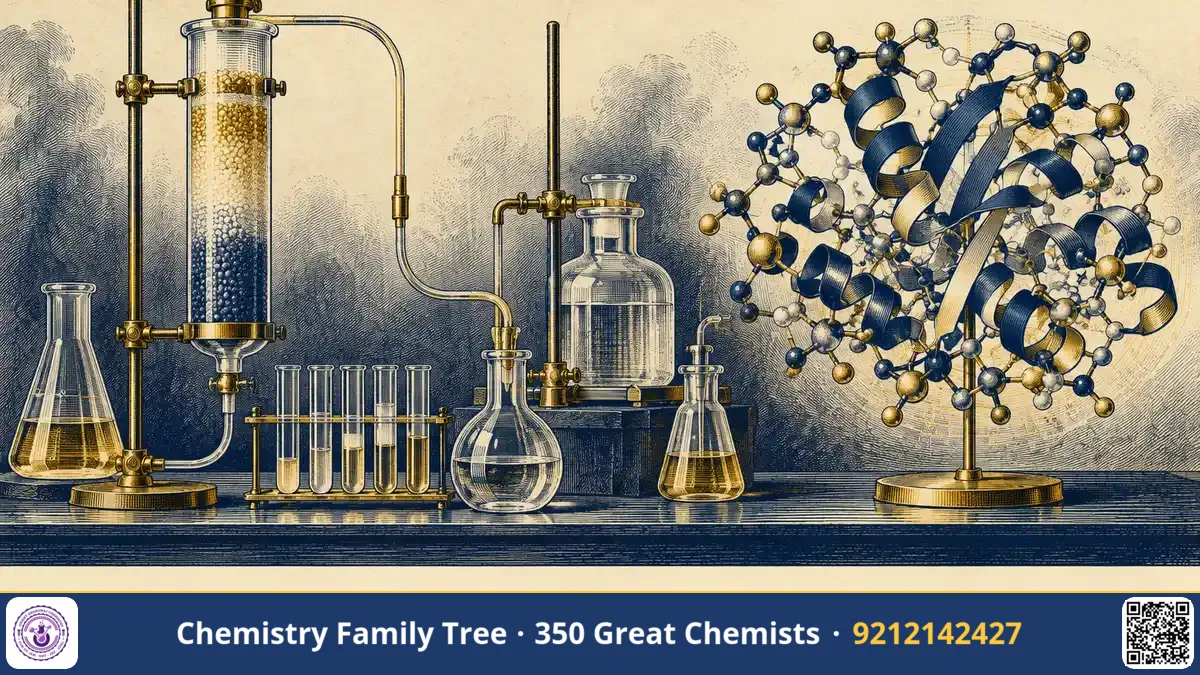
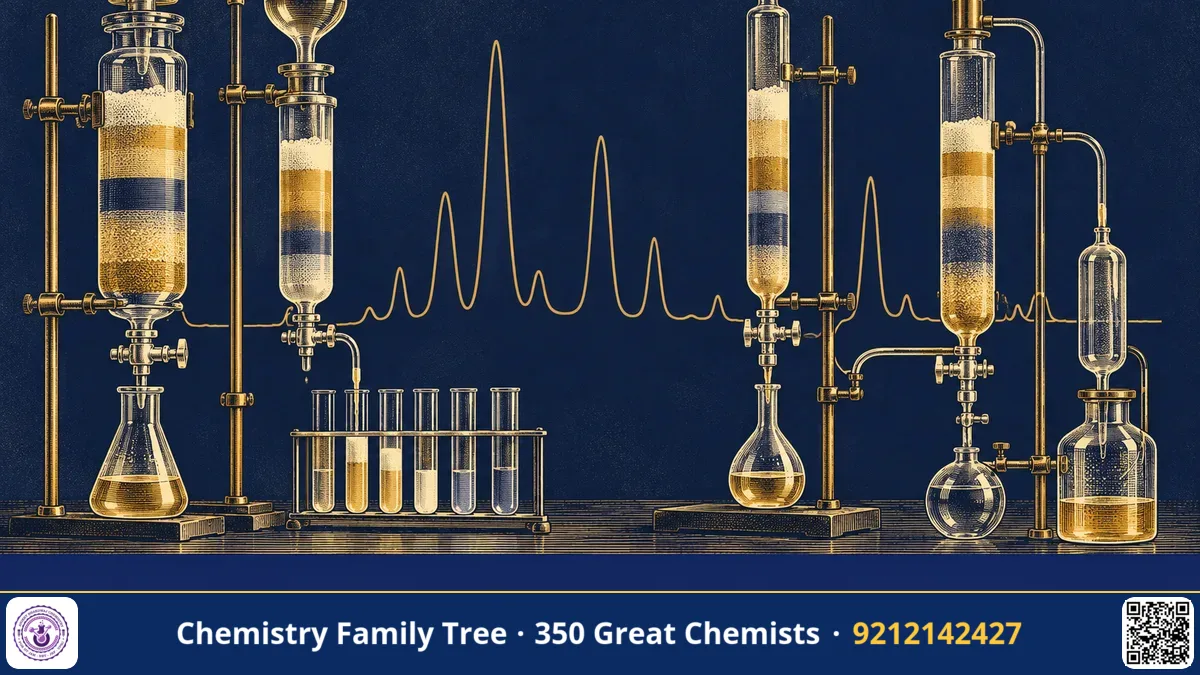
Here is the idea behind chromatography. Chromatography separates the parts of a mixture because they move at different speeds through a material. In column chromatography, that material is packed into a vertical tube. You pour the mixture in at the top and wash it down with a liquid. The parts leave the column at different times, so you can collect them separately.
How the two men came to work together
Stein began as a chemistry major at Harvard in 1929. In 1934 he moved to the Department of Biological Chemistry at Columbia University. In 1937 he finished his PhD thesis on the amino acid composition of elastin, a protein of connective tissue. Max Bergmann, a biochemist at Rockefeller Institute, introduced him to two chemicals that precipitate amino acids. Stein used them to isolate glycine and proline. He then went to work under Bergmann.
Moore took his doctorate in organic chemistry at the University of Wisconsin–Madison in 1938. He joined Bergmann's laboratory in 1939. He stayed at Rockefeller for his whole professional career, except for a period of government service in World War II.
Be careful about credit. It is tempting to say that Stein alone built the chromatography columns. The sources describe the automated amino acid analyzer as developed by Moore and Stein together. Stein was involved in its invention, and it was an advance in chromatography. It opened the door to later methods such as liquid chromatography and gas chromatography. When you write an exam answer, name both chemists.
A timeline you can revise from
Use this table to keep the order of events straight. Every date comes from the record of the two chemists.
| Year | Event |
|---|---|
| 1937 | Stein completes his PhD thesis on the amino acid composition of elastin |
| 1938 | Moore earns his doctorate in organic chemistry |
| 1939 | Moore joins Bergmann's laboratory |
| 1958 | Moore and Stein develop the first automated amino acid analyzer |
| 1959 | They announce the first complete amino acid sequence of an enzyme, ribonuclease |
| 1972 | Nobel Prize in Chemistry shared by Anfinsen, Moore and Stein |
| 1984 | Nobel Prize in Chemistry to Merrifield, for chemical synthesis of proteins |
Notice that the sequence came one year after the analyzer. The machine made the analysis practical enough for the sequence to be completed. A good method often comes first, and the big result follows.
What the 1972 prize recognised
Three scientists shared the 1972 prize. Christian Anfinsen was honoured for his work on protein folding. Moore and Stein were honoured for their work on the structure of ribonuclease, and for helping explain how its chemical structure connects to its catalytic activity. That phrase means how well the enzyme speeds up its reaction.
The three pieces fit together:
- Sequence (Moore and Stein): which amino acids are present, and in what order.
- Folding (Anfinsen): how the sequence leads to the final three-dimensional shape. His studies of ribonuclease laid the groundwork for this link.
- Mechanism: how the folded enzyme does its job. RNase A was the first enzyme for which a correct catalytic mechanism was proposed, even before its structure was known.
Ribonuclease kept its place in research. The 1984 prize to Robert Bruce Merrifield, for developing chemical synthesis of proteins, was the second Nobel Prize in Chemistry connected with this protein. It was also the model protein used to work out many methods for studying protein structure, such as NMR spectroscopy.
How to find Stein's biography on the Family Tree page
Our Chemistry Family Tree page shows who taught whom among great chemists. It also helps you move from a discovery to the person. Follow these steps:
- Open the Chemistry Family Tree page of this blog.
- Find the box labelled Find a chemist. It shows the hint "Type a name, e.g. Liebig".
- Type a name in the same way. Try "Stein", then try "Moore".
- Open the chemist's page. Every chemist has a page with teachers, students, a discovery post and a biography.
Read the biography for the life story. Read this post for the discovery itself. If a name does not appear, check the spelling. Lineage links are compiled only from well-established relationships, so some chemists appear without teachers.
The page also has Surprise me and Longest lineage controls. Use them when you want to explore without a fixed name in mind.
How to study this topic
Do not memorise only the dates. Learn the order of steps behind them. A protein must be purified, broken into parts, and then each part must be identified. The analyzer helped with the identifying and counting. That is why Moore and Stein appear in any history of protein sequencing.
For each discovery you revise, ask one question: what slowed people down, and which new tool or method removed the delay? Writing that one line in your notes is better than copying a long paragraph.
Moore left one more detail worth remembering. He left his estate to Rockefeller University to help a young scholar get the opportunity he had. Their careers were so closely linked that his last publication was a memoir of Stein.
Key takeaways
- Moore and Stein developed the first automated amino acid analyzer in 1958, an advance in chromatography.
- In 1959 they announced the first complete amino acid sequence of an enzyme, ribonuclease.
- Anfinsen, Moore and Stein shared the 1972 Nobel Prize in Chemistry for work on ribonuclease.
- Credit the analyzer to the pair, not to Stein alone.
- Use Find a chemist on the Family Tree page to open a chemist's biography and discovery post.
Frequently asked questions
What is ribonuclease?
It is an enzyme that cuts single-stranded RNA. The cattle pancreas form, called RNase A, is one of the classic model systems of protein science.
Did Stein work alone on the chromatography method?
No. The automated amino acid analyzer was developed by Moore and Stein together. Their careers were closely linked, and both shared the 1972 Nobel Prize.
What did the amino acid analyzer do?
It was the first automated machine of its kind. It made it easier to determine protein sequences.
Why was ribonuclease chosen for study?
It is extremely stable and can be purified in large quantities. It is also a small protein of 124 residues.
How do I find Stein on the Family Tree page?
Type his surname in the Find a chemist box. Then open his page to see his teachers, students, discovery post and biography.
What to do next. Try it yourself on the page below.
Chemistry Family Tree — who taught whom among 350 great chemists →