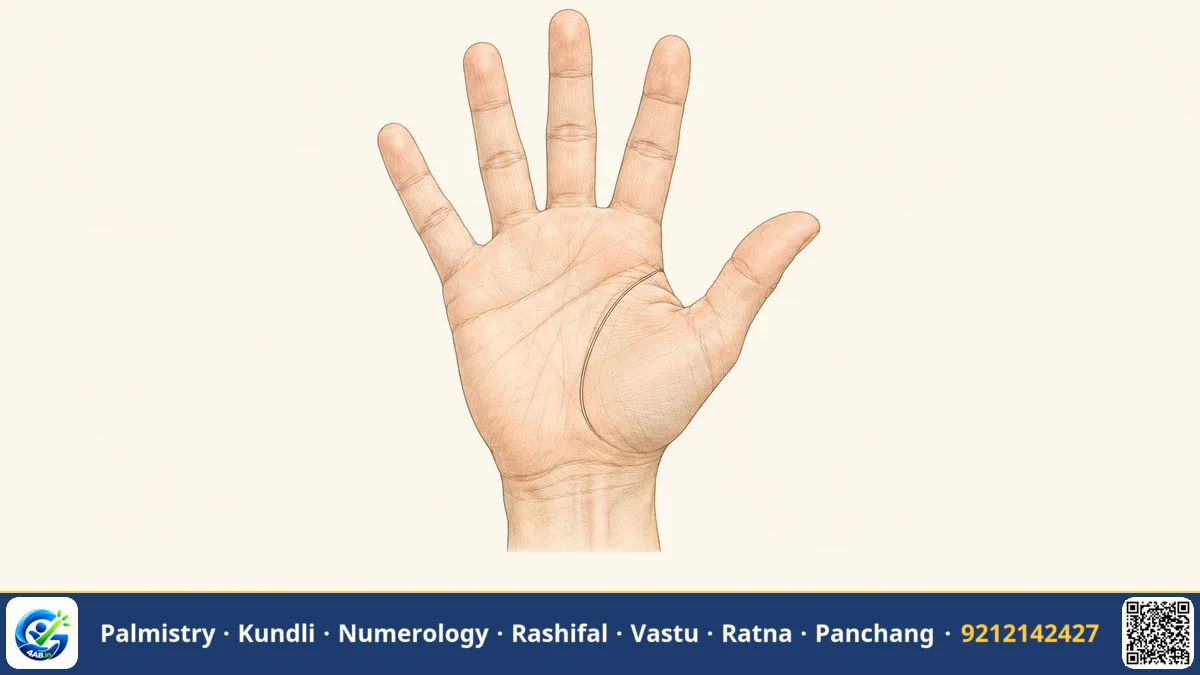
Which hand to read in palmistry: left or right
Many beginners ask whether palmistry (Hast Rekha) is read from the left hand or the right hand.
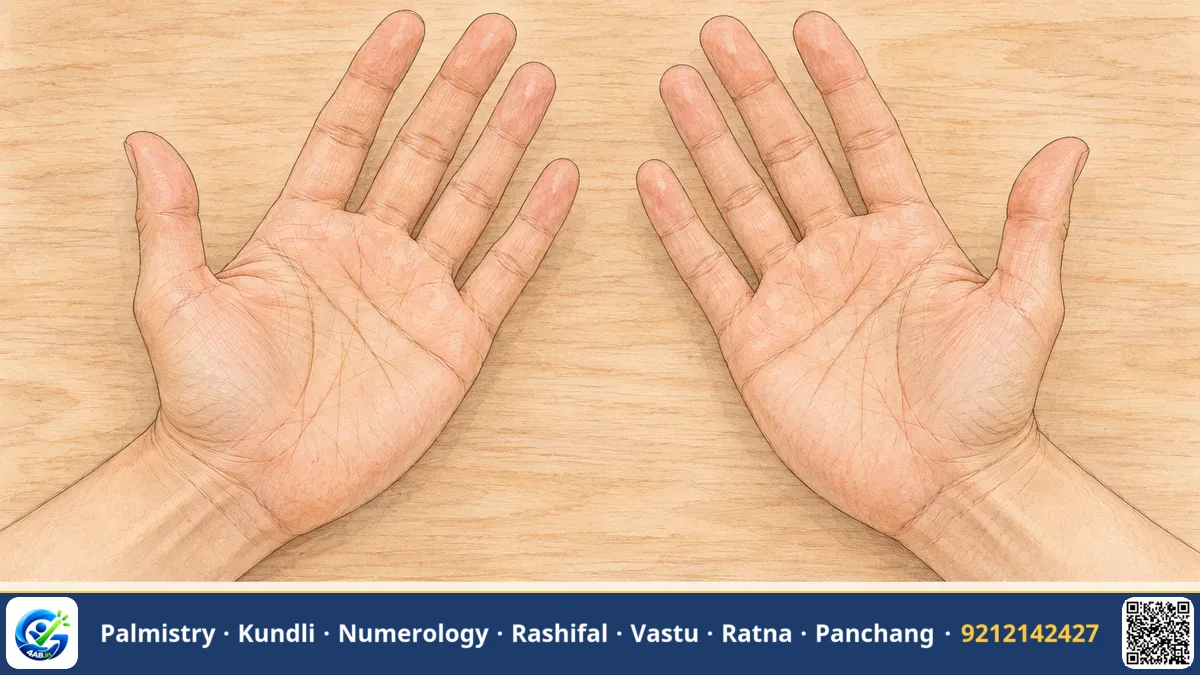
This post gives you a simple rule, a way to compare both hands, a short guide to the main lines and mounts, and tips for taking a clear palm photo.
The traditional rule in plain words
Palmistry is the practice of reading the lines, mounts and fingers of the palm. A mount is a raised, fleshy area of the palm. Each mount has its own traditional meaning.
You may have heard a rule that splits the hands by gender. This blog does not use it. The rule here depends on which hand you use, not on who you are.
- Dominant hand: the hand you write with. It is traditionally read for the life you are actively making.
- Non-dominant hand: the other hand. It is traditionally read for inherited tendencies.
Notice the words "traditionally read." Palmistry is a traditional, belief-based practice. Use it for learning and reflection. It is not a scientific prediction.
Why you should ask, not assume
Most people are right-handed, so beginners often start with the right hand without thinking. That is a mistake. A left-handed person has a different dominant hand.
Before you read any palm, ask one simple thing: which hand does this person write with? The answer tells you which hand is the main one.
Some people write with one hand and do other tasks with the other. Use the writing hand as the dominant hand. It keeps the method simple and the same every time. If you still feel unsure, note it and read both hands.
Reading both hands side by side
You do not have to pick only one hand. A good habit is to look at both and compare them. This is where beginners learn the most.
Start with the major lines. Traditionally these are four: the life line, the head line, the heart line and the fate line. The heart line runs across the upper palm, just below the fingers. The head line runs across the middle of the palm.
Look at the same line on each hand and ask simple questions. Is it long or short? Is it clear or faint? Does it look much the same on both hands, or very different?
| What to look at | Dominant hand | Non-dominant hand |
|---|---|---|
| Traditional focus | The life you are actively making | Inherited tendencies |
| Heart line (emotional life) | Read as it shows now | Read as a starting tendency |
| Head line (way of thinking) | Read as it shows now | Read as a starting tendency |
| How to use it | Read it first | Compare it with the first hand |
The table shows the traditional link between each hand and each line. Tradition reads the heart line for emotional life and the head line for the way a person thinks. These describe tendencies. They are not forecasts.
A quick word on mounts
Once you are comfortable with the lines, look at the mounts. They sit at the base of the fingers and around the palm. Do not try to read them all at once as a beginner.
Pick one hand, then check whether each mount looks full and raised, or flat. Do the same on the other hand. Note any difference, as you did with the lines. Different teachings often interpret the same mount in different ways, so hold such readings lightly.
How to look at your own palm
You can do a simple self-observation without any tool. The Palmistry / Hast Rekha page on this site works the same way. Its "Read Your Own Hand" section asks plain questions about what you can actually see on your palm, and the reading is built from your answers.
Follow these steps:
- Sit in good daylight.
- Let your hand relax. Do not stretch or clench it.
- Look at the palm you are answering for. Decide first if it is the dominant or the non-dominant hand.
- Check each line one by one.
- Skip anything you cannot see clearly.
"Not sure" is a real answer. Leaving a question blank is better than a guess. A wrong guess gives you a wrong reading, and you will not know why.
Photo tips for a clear palm picture
A photo helps you study the lines slowly and compare both hands later. Here is how to take a useful one.
- Use daylight. Stand near a window. Avoid a strong light directly above you, because it can wash out the fainter lines.
- Relax the hand. A tight, stretched palm changes how the lines look. Keep the fingers loose and slightly apart.
- Keep the palm flat to the camera. Hold the phone straight above the palm, not at a slant.
- Take one photo of each hand. Use the same light and the same distance, so the two are easy to compare.
- Label the photos. Note which is the dominant hand and which is the non-dominant hand.
- Check that the photo is sharp. Zoom in. If the heart line and head line look blurred, take it again.
Keep the whole palm in the frame, from the base of the fingers to the wrist. You will then see the major lines and the mounts together.
Common beginner mistakes
- Assuming the right hand is dominant. Always ask.
- Reading only one hand. Compare both when you can.
- Treating a reading as a fact about the future. It is a traditional interpretation.
- Guessing at faint lines. Skip what you cannot see.
- Using a reading as advice. It must not replace medical, legal, financial or other professional advice.
Palmistry is widely viewed as a pseudoscience, and different teachings often interpret the same line in different ways. So treat it as a way to reflect and learn, not as proof of anything.
Key takeaways
- The dominant hand (the one you write with) is traditionally read for the life you are actively making.
- The non-dominant hand is traditionally read for inherited tendencies.
- Do not assume the right hand is dominant. Ask which hand is used for writing.
- Use daylight, a relaxed hand and a flat, sharp photo of each hand to compare them.
- Readings describe tendencies. They are not predictions or professional advice.
Frequently asked questions
Which hand should a beginner read first?
Read the dominant hand first. This is the hand you write with. Then look at the non-dominant hand and compare the two.
Is the right hand always the main hand?
No. Do not assume it. A left-handed person writes with the left hand, so the left hand is the dominant one. Always ask first.
What does the non-dominant hand show?
Traditionally, it is read for inherited tendencies. This is a traditional view and not a proven fact.
What if I cannot see a line clearly?
Skip it. "Not sure" is a real answer, and leaving it blank is better than a guess. You can look again later in good daylight with a relaxed hand.
Can a palm reading tell me what will happen in my life?
No. Palmistry here is a traditional interpretation, not a prediction. A long, clear head line is read as a tendency, not a forecast. Readings must not be used as medical, legal or financial advice.
What to do next. Try it yourself on the page below.
Palmistry / Hast Rekha — Lines, Mounts, Fingers & Signs →