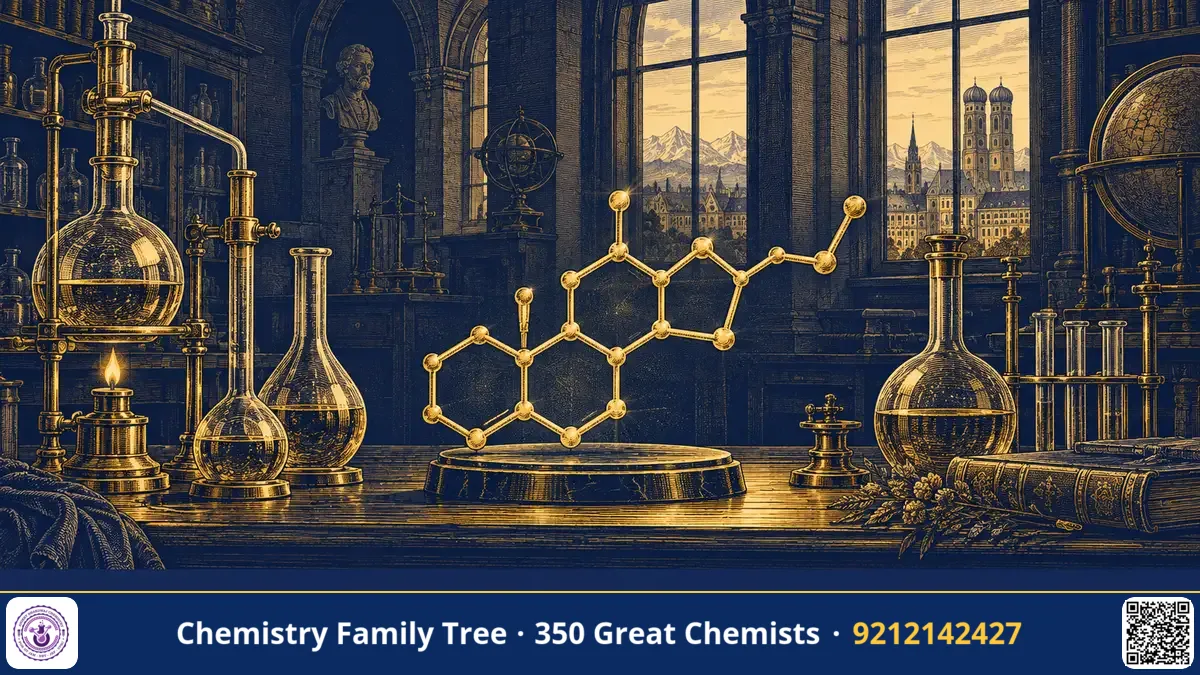
Adolf Windaus and the photochemical synthesis of vitamin D
This post follows the argument that led chemists from rickets to vitamin D.
You will see which idea was wrong, how it was corrected, and what the reaction sequence looks like.
The problem: why did children get rickets?
Rickets is a bone disease caused by vitamin D deficiency. In the early 1900s, doctors saw that whole milk or cod-liver oil helped children. Some also believed that more sunlight improved the condition.
So there were two clues, and nobody knew how they fitted together. One clue was a food factor. The other was light. A chemist had to ask: is there one substance behind both?
The vitamin itself was identified in 1922, as part of the effort to find the dietary deficiency behind rickets. That told people there was something to isolate. It did not tell them what the molecule was.
The debate: which molecule does light activate?
Some researchers thought that light worked on a sterol in the body. A sterol is a molecule with a fused hydrocarbon ring system and an alcohol (–OH) group. Cholesterol is the best-known example.
The first guess was that cholesterol itself was the precursor, the starting material, and that UV light activated it. This idea looked sensible. Cholesterol is common in animals, and Windaus had studied it for years.
But this conclusion was drawn too early. Investigators working under Windaus tested it with a careful step. They took cholesterol, converted it into its dibromide (a derivative with two bromine atoms added across a double bond), and recrystallised it. That process removes impurities.
The lesson for you is simple. When a result seems to come from a pure compound, ask whether the sample was really pure. A small impurity can do the work that you credit to the main substance. The purified cholesterol did not behave as the precursor, so something else in the crude samples must have carried the activity.
Sterols in the lab: what Windaus compared
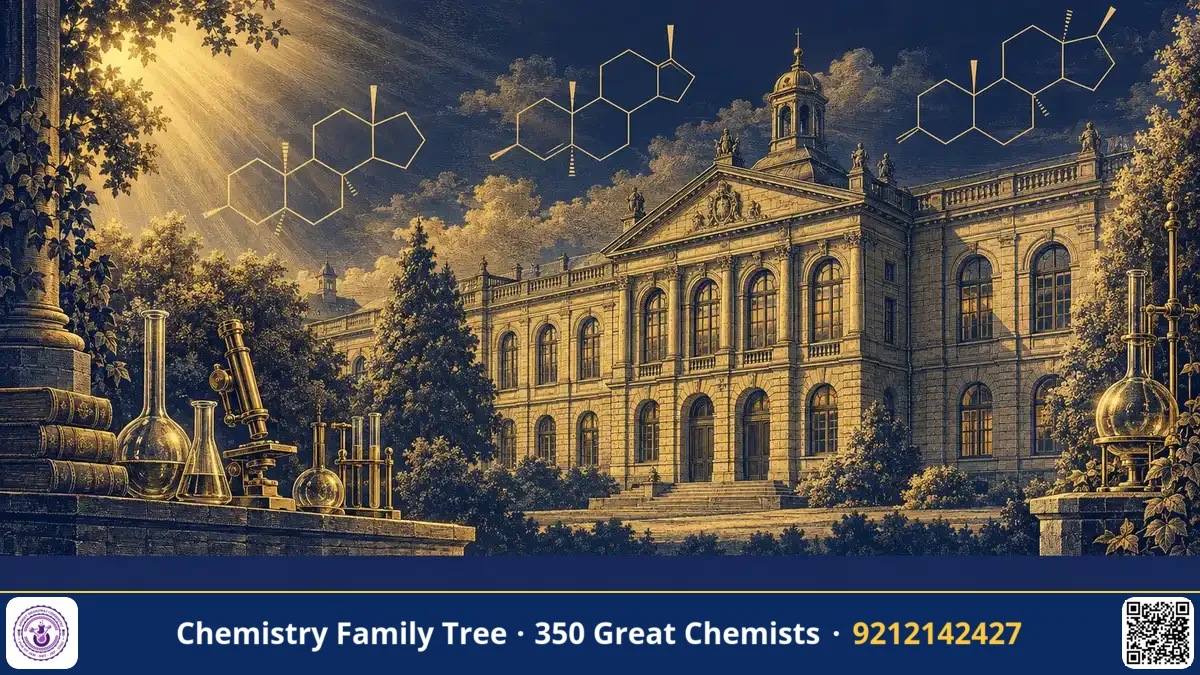
Windaus had spent years comparing sterols from different living things. This background mattered, because it let his group ask which sterol could be the real precursor.
| Sterol type | Found in | Point to note |
|---|---|---|
| Cholesterol | Higher animals | Has one double bond in the ring system |
| Zoosterols | Insects, echinoderms, sponges | Most share the formula of cholesterol; spongosterol is saturated |
| Phytosterols | Plants | Sitosterols are the most common |
| Mycosterols | Fungi | Ergosterol has three double bonds |
Ergosterol is the useful one for this story. It is a fungal sterol with more double bonds than cholesterol. Those extra double bonds make it respond to UV light. When light acted on it, the product was vitamin D2, also called ergocalciferol.
So the group found that vitamin D2 comes from a fungal sterol. Next came the question for animals and humans: which sterol gives vitamin D3?
The reaction sequence: from 7-dehydrocholesterol to active vitamin D
The animal-side precursor is 7-dehydrocholesterol. It is a cholesterol-like sterol with one extra double bond in the ring system. The sources describe the whole change from a cholesterol-type sterol to vitamin D3 as taking place through several steps. At textbook level, the steps run as follows.
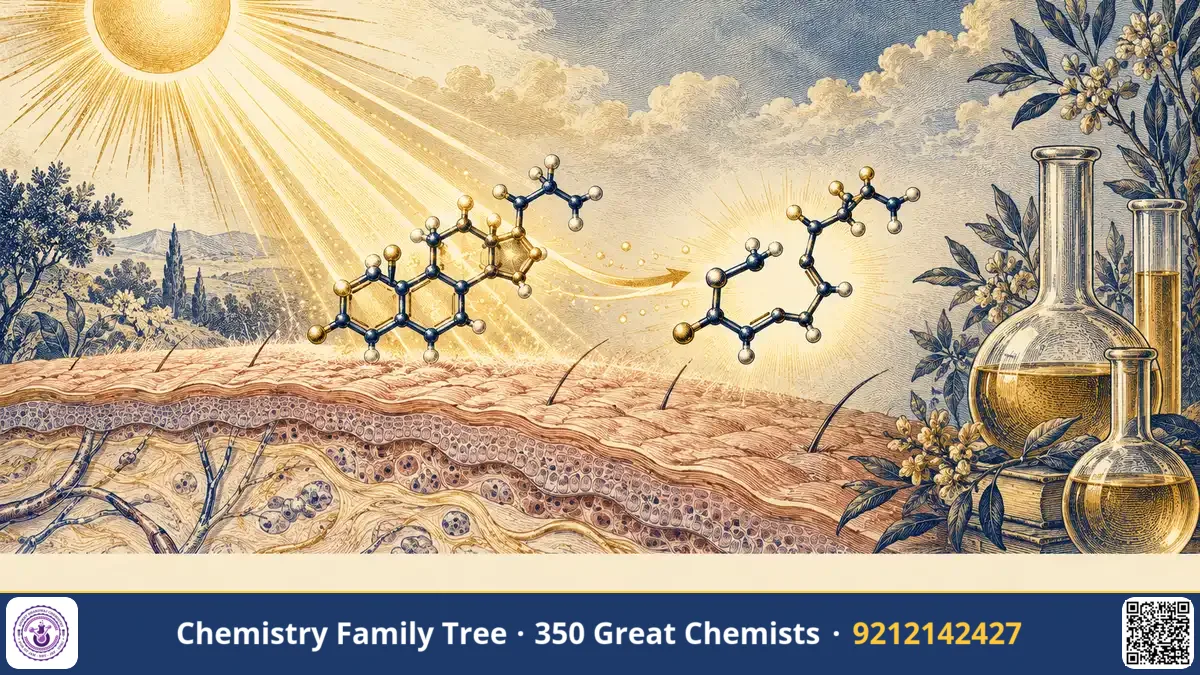
- Light step. UVB radiation from sunlight falls on the skin. It acts on 7-dehydrocholesterol in the deeper layers of the epidermis, the outer skin.
- Ring opening. The light breaks one bond in the ring system. This is a photochemical reaction, which means light supplies the energy. The molecule is no longer a closed four-ring sterol. A molecule of this kind, with one ring opened, is called a secosteroid.
- Rearrangement. The opened molecule shifts its atoms and settles into vitamin D3, cholecalciferol.
- Liver step. The liver converts cholecalciferol into calcifediol, which is 25-hydroxycholecalciferol. Doctors measure this form in blood to judge a person's vitamin D status.
- Kidney step. The kidneys, and some immune cells, hydroxylate calcifediol again. This gives calcitriol, the biologically active form.
- Action. Calcitriol attaches to vitamin D receptors, which are nuclear receptors found in many tissues.
Hydroxylation means adding an –OH group. Notice that the vitamin made by light is not yet active. It becomes active only after two hydroxylation steps in the body.
Why this changed how people used the vitamin
Because light turns a sterol into the vitamin, it became possible to make the vitamin by irradiating a sterol outside the body. This is the photochemical synthesis in the title.
Windaus gave his patents to two companies, and they brought out a medical preparation called Vigantol in 1927. That is a year before his Nobel Prize in 1928, which was given for his work on the constitution of sterols and their connection with vitamins.
Before this, the traditional remedy was cod-liver oil. It became popular for children in Europe after observations, starting in Germany in the 1820s, that children who took it did not develop rickets. The chemistry explained why such a remedy worked and gave a way to make the vitamin in a controlled form.
One more point is worth noting. The name "vitamin D" is arguably a misnomer. The body can make it from sunlight, so it behaves more like a hormone precursor than a true dietary vitamin. For most people, skin synthesis contributes more than food does.
How to study this topic
Do not just memorise the names. Draw the chain on one page and mark each arrow as light or enzyme. Then add a one-line reason for each step.
Also keep the history in mind. A wrong guess (cholesterol is the precursor) was corrected by a better experiment (purification and testing). This pattern is common in science, and it is a useful answer when a question asks how a discovery was made.
If you want to see where Windaus sits among other chemists, use the Find a chemist box on the Chemistry Family Tree. The page lists him as an organic chemist, and the sources record that he was the doctoral advisor of Adolf Butenandt, who also won a Nobel Prize in Chemistry.
Key takeaways
- Early researchers wrongly thought that UV light activated pure cholesterol; tests under Windaus corrected this.
- A sterol with extra double bonds, such as ergosterol, responds to UV light and gives a vitamin D form.
- In human skin, UVB acts on 7-dehydrocholesterol and gives cholecalciferol (vitamin D3).
- The liver makes calcifediol and the kidney makes calcitriol, the active form.
- Windaus received the 1928 Nobel Prize in Chemistry for his work on sterols and vitamins.
Frequently asked questions
What is the difference between vitamin D2 and vitamin D3?
Vitamin D2 is ergocalciferol and comes from ergosterol, a fungal sterol. Vitamin D3 is cholecalciferol and is made in skin from 7-dehydrocholesterol. Both are important in humans.
Is cholecalciferol the active form of vitamin D?
No. It is converted in the liver to calcifediol. The kidneys and some immune cells then make calcitriol, which is the biologically active form.
Why is UVB light needed?
UVB is the component of sunlight that drives the ring-opening reaction in the skin. Without it, the skin does not make cholecalciferol, so diet becomes more important.
What did Windaus win the Nobel Prize for?
He received the 1928 Nobel Prize in Chemistry for his work on the constitution of sterols and their connection with vitamins.
Does this post tell me how much vitamin D to take?
No. It explains the chemistry only. For dose or any health question, speak to a qualified doctor.
What to do next. Try it yourself on the page below.
Chemistry Family Tree — who taught whom among 350 great chemists →