Liebig and the Law of the Minimum in Agricultural Chemistry
This post follows one argument in the history of chemistry: what makes plants grow, and who was right?
You will see how Justus von Liebig challenged the humus idea, and how to apply the Law of the Minimum in a question.
What the humus theory claimed
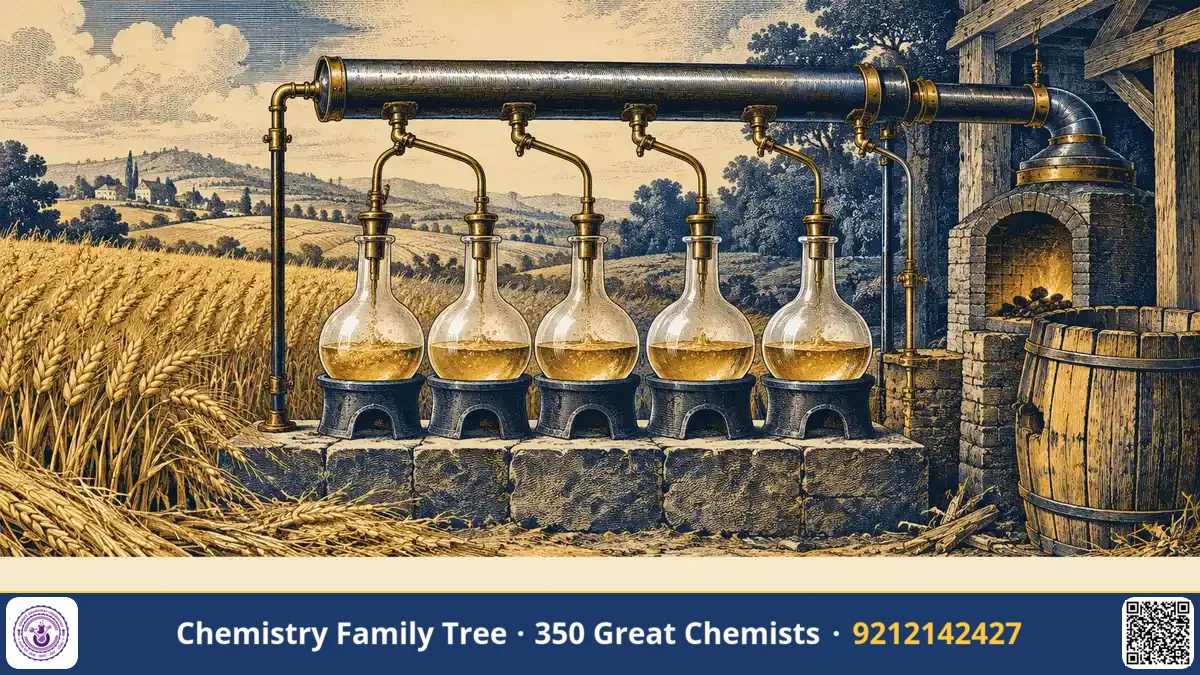
Humus is the dark, decayed plant and animal matter in soil. Farmers had long seen that soil rich in humus gave better crops. So a simple idea grew: plants eat humus, and the more humus in the soil, the better the plant grows.
This was not a foolish idea. It matched what farmers saw in the field. The old practice of composting, which uses rotted organic material to restore soil, fitted it well. Compost did help crops. The question was why it helped.
The humus idea answered that question with a whole substance: the plant takes in humus. Chemistry in the early nineteenth century was beginning to ask a sharper question. Which elements does a plant actually take in?
How Liebig turned the argument towards minerals
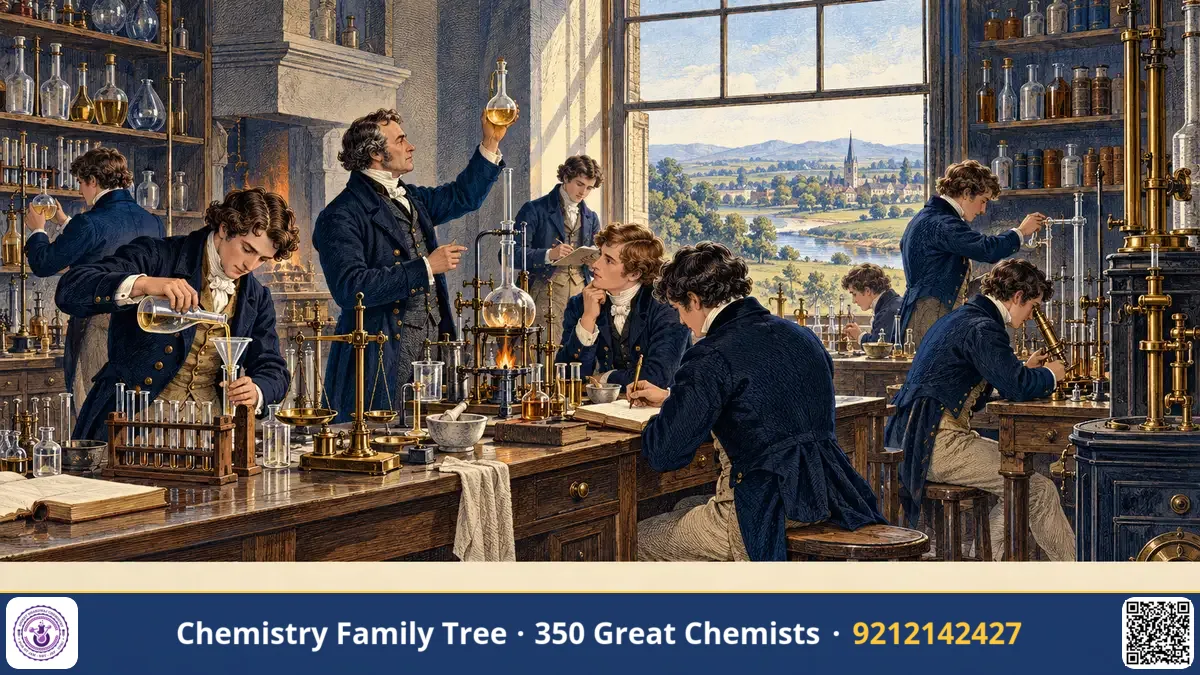
Liebig was a professor at the University of Giessen. He was known for teaching chemistry through laboratory work. He and his students used analysis to study what plants contain and what they need.
In 1840 he published a book on organic chemistry applied to agriculture and physiology. It put his case in front of a wide audience. He stressed nitrogen and mineral nutrients, such as phosphorus and potassium, as essential for plants. He is also credited with showing that nitrogen is an essential plant nutrient.
Think about what this changes. Under the humus view, soil is a food store. Under Liebig's view, soil is a source of specific chemical elements, and each one can run short. If a mineral is missing, no amount of humus can replace it.
Liebig did not win the argument by one experiment. The shift came as analysis improved and farmers saw that supplying particular nutrients raised yields.
The Law of the Minimum, stated plainly
The law says that growth is dictated not by the total resources available, but by the scarcest one. That scarce resource is called the limiting factor.
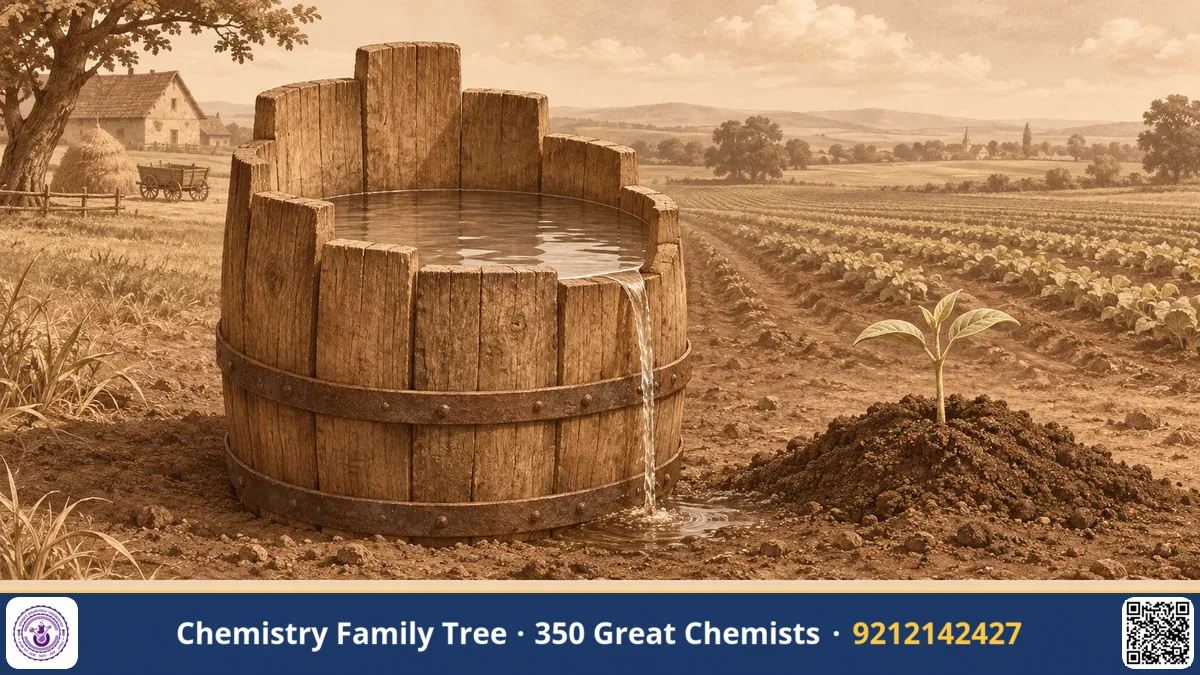
A common way to picture it is a chain. A chain is only as strong as its weakest link. Add strength to the other links and the chain does not get stronger. In the same way, adding more of a nutrient that is already plentiful does not improve growth. Only raising the limiting nutrient helps.
A small point of history helps here. The principle was developed by Carl Sprengel in 1840, and Liebig later made it widely known. So when you write about it in an exam, say that Liebig popularised it. Do not say he alone discovered it.
Worked example (a hypothetical field): A farmer's soil has plenty of nitrogen and potassium but very little phosphorus. The crop looks weak. The farmer adds a nitrogen fertiliser, thinking nitrogen is the problem.
- List the nutrients the crop needs: nitrogen, phosphorus, potassium.
- Find the one that is scarcest in relation to need. Here it is phosphorus.
- Apply the law: growth is set by phosphorus. Extra nitrogen will not raise growth much.
- Decision: add a phosphorus source, then test again. Another nutrient may now be the limiting one.
Step 4 is important. Once you fix one shortage, the next-scarcest nutrient becomes the limit.
Humus theory and mineral theory side by side
| Point | Humus theory | Liebig's mineral view |
|---|---|---|
| What the plant takes from soil | Decayed organic matter itself | Mineral elements and nitrogen |
| Why compost helps | It supplies food directly | It returns nutrients to the soil |
| What limits growth | Lack of humus | The scarcest essential nutrient |
| What a farmer should check | Humus content | Which nutrient is short |
| Chemical approach | Descriptive | Analysis of plants and soil |
Notice that Liebig's view explains the old observation too. Compost does help, but because it carries nutrients, not because humus is the plant's food.
From the law to fertilisers
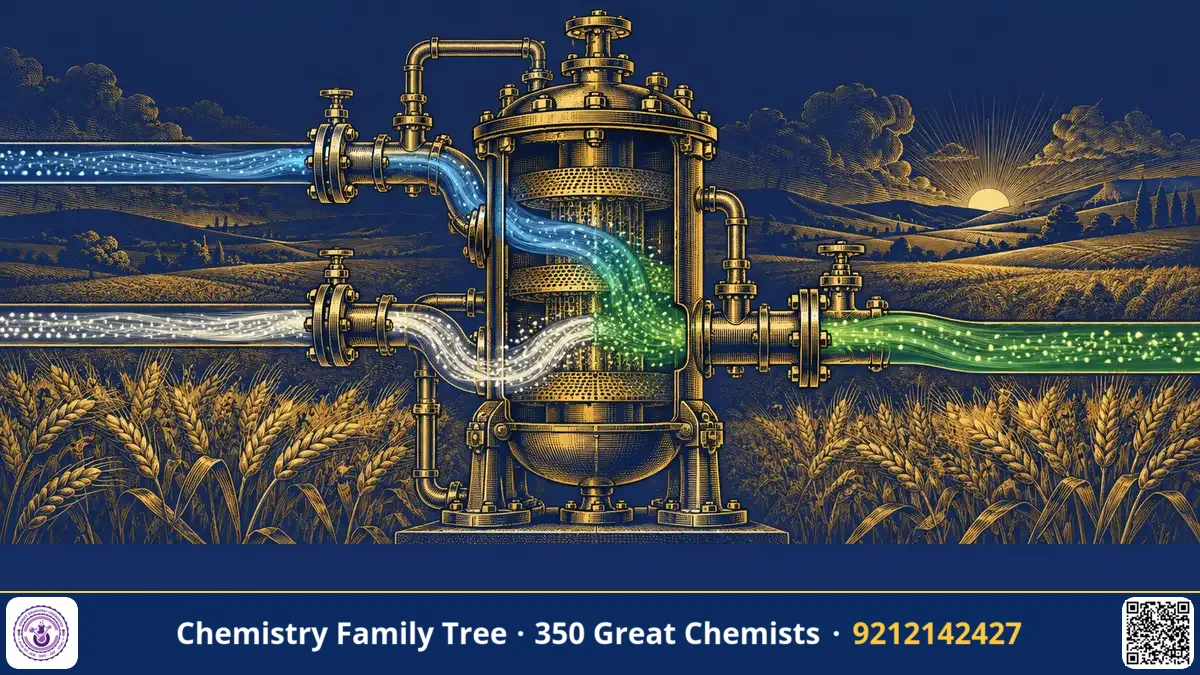
If nutrients can be the limiting factor, then a farmer can supply the missing one. This is the idea behind modern fertiliser use. Liebig has been called the "father of the fertilizer industry" because of his emphasis on nitrogen and minerals.
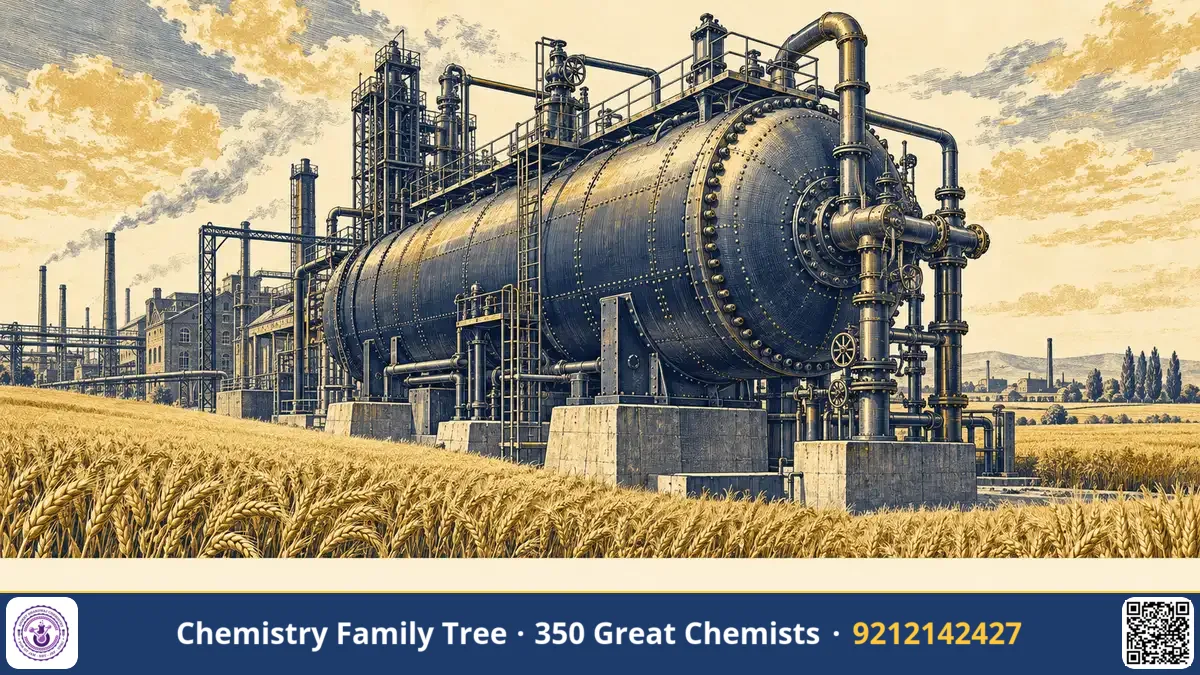
The story continued after him. Nitrogen is often the shortage, and it is hard to supply in a usable form. The Haber-Bosch process, which makes ammonia, answered that need. The ammonia is used in most fertilisers. Fritz Haber received a Nobel Prize in Chemistry in 1918 for this work, and Carl Bosch received one in the same year for high-pressure studies.
So the line of thought runs like this. First came the question of what plants need. Then came the idea that the scarcest need controls growth. Then came industrial ways to supply the scarce nutrient.
Where the law is used, and where it is questioned
The law has moved beyond farms. Ecologists use it for populations of living things, with factors such as sunlight, nitrate or phosphate. At any moment one factor is more limiting than the others, and growth follows that one.
Be careful, though. Finding the limiting factor in a real crop is a common study, but the approach has been criticised. A real field is not a clean list of separate nutrients. This is a useful point to add in an answer that asks you to evaluate the law. The law is a good first model. It is not the whole story.
How to write this in an exam answer
- Start with the humus theory in one line, so the reader sees what Liebig was arguing against.
- State what Liebig stressed: nitrogen and minerals as essential nutrients.
- State the law in your own words, with the chain or barrel picture.
- Credit Sprengel for developing the principle in 1840, and Liebig for making it known.
- Close with one limitation, such as the criticism of diagnosing limiting factors in crops.
If you want to see who taught Liebig and whom he taught, use the "Find a chemist" box on the Chemistry Family Tree page and type a name, for example Liebig. Every chemist there has a page with teachers, students, a discovery post and a biography.
Key takeaways
- The humus theory said plants feed on decayed organic matter. Liebig pushed the view that plants need nitrogen and mineral nutrients.
- The Law of the Minimum says growth is set by the scarcest nutrient, not by the total resources available.
- Sprengel developed the principle in 1840. Liebig popularised it.
- Fixing one shortage makes the next-scarcest nutrient the new limit.
- The law is a useful model, but diagnosing limiting factors in real crops has been criticised.
Frequently asked questions
What is the humus theory?
It is the older view that plants take in humus, the decayed organic matter in soil, as their main food. Liebig's work on nitrogen and mineral nutrients challenged it.
What is the Law of the Minimum in simple words?
Plant growth depends on the scarcest nutrient, not on the total amount of resources. Adding more of a plentiful nutrient does not help. Raising the limiting nutrient does.
Did Liebig discover the law himself?
Not alone. Carl Sprengel developed the principle in 1840, and Liebig later made it widely known. That is why it is often called Liebig's law.
Why is Liebig linked with fertilisers?
He emphasised nitrogen and minerals as essential plant nutrients. For this he has been called the father of the fertilizer industry.
Is the law used only for crops?
No. It is also applied to biological populations and ecosystem models, where factors such as sunlight, nitrate or phosphate can limit growth.
What to do next. Try it yourself on the page below.
Chemistry Family Tree — who taught whom among 350 great chemists →