Aaron Ciechanover and Ubiquitin Protein Degradation

This post shows how Aaron Ciechanover and his colleagues worked out how cells break down and recycle their own proteins.
You will also learn how to trace his mentors and co-workers using the Find a chemist box on the Chemistry Family Tree.
The puzzle: a cell that spends energy to destroy proteins
Proteins are built from amino acids. Breaking a protein into amino acids is called proteolysis. Students already know one place where this happens: the lysosome, a small sac in the cell that holds digestive enzymes.
Then came an odd observation. In cell extracts, protein breakdown was found to depend on ATP, the cell's energy currency. A process that costs energy is usually controlled and selective. A cell does not pay for something it can do freely.
This is the debate to remember. Nobody doubted that proteins get broken down. The open question was what kind of machinery does the work outside the lysosome, and how it chooses which proteins to remove. Ciechanover's work with Hershko and Rose answered both parts.
Where and how the work was done
The basic functions of ubiquitin and the parts of its pathway were worked out in the early 1980s at the Technion in Haifa, Israel. The team was Aaron Ciechanover, Avram Hershko and Irwin Rose.
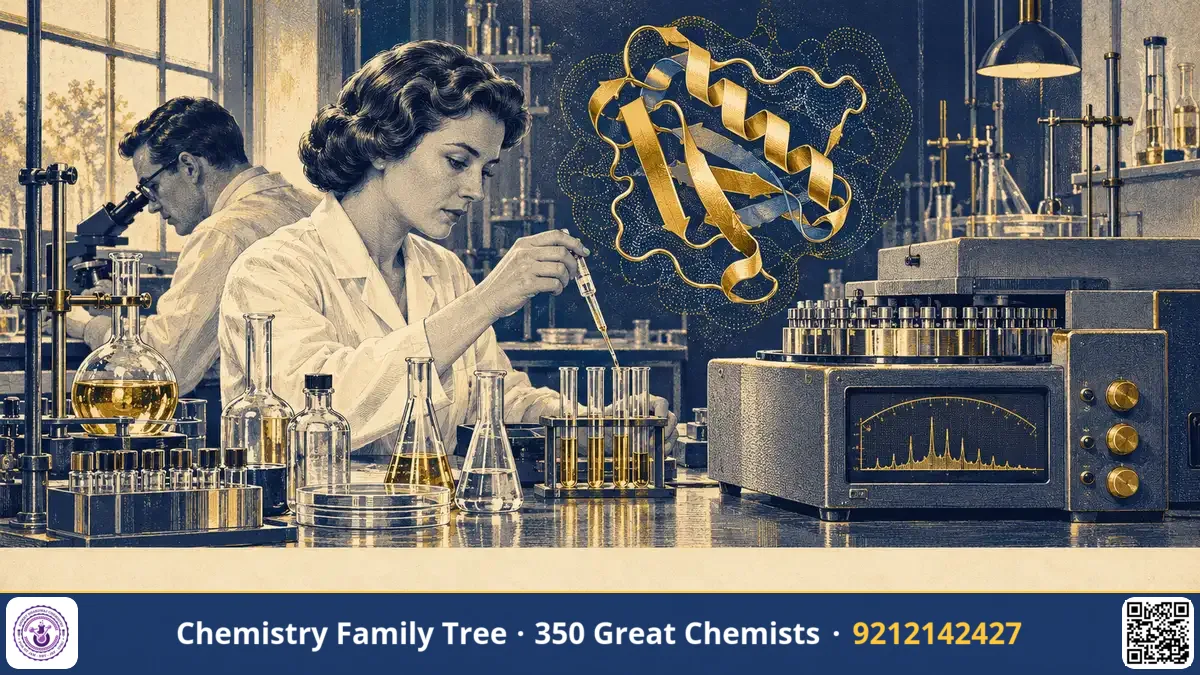
The system was first described as an ATP-dependent proteolytic system present in cellular extracts. A cell extract is what you get when cells are broken open and their contents are kept in a tube. A scientist can then add or remove one ingredient at a time and see what changes. For a UG student, this is the key lesson: turn a big, messy question about a living cell into a clean test-tube experiment.
The material came from reticulocytes, which are young red blood cells. A paper from 1978 on Ciechanover's publication list carries the title of this early work: a heat-stable polypeptide component of an ATP-dependent proteolytic system from reticulocytes.
Step by step: how the discovery unfolded
- An energy-dependent system is seen in extracts. Protein breakdown needed ATP, which pointed away from plain lysosomal digestion.
- A heat-stable helper is found. A small polypeptide in the extract survived heating. It was named APF-1, short for ATP-dependent proteolysis factor 1.
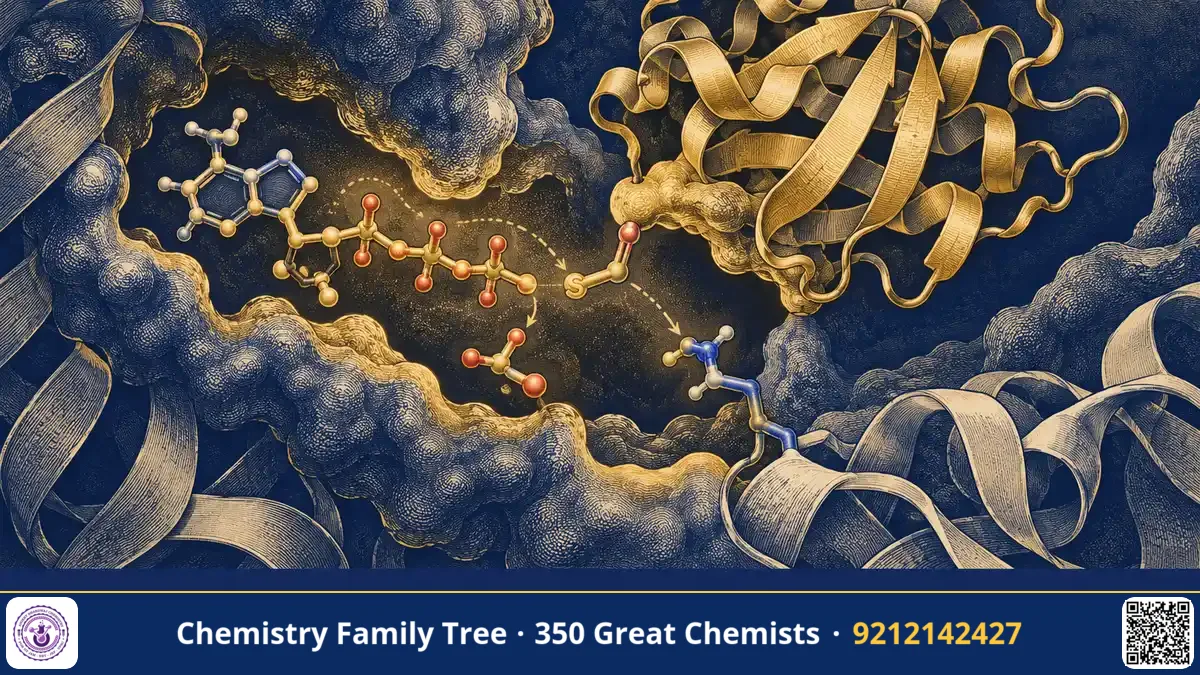
- APF-1 sticks to the target. With the model protein lysozyme, APF-1 became covalently attached. The process needed ATP and magnesium ions (Mg2+). A covalent bond is a strong bond made by shared electrons, so this was a real chemical tag and not loose sticking.
- Many tags, one target. Several APF-1 molecules were linked to a single substrate molecule through an isopeptide linkage.
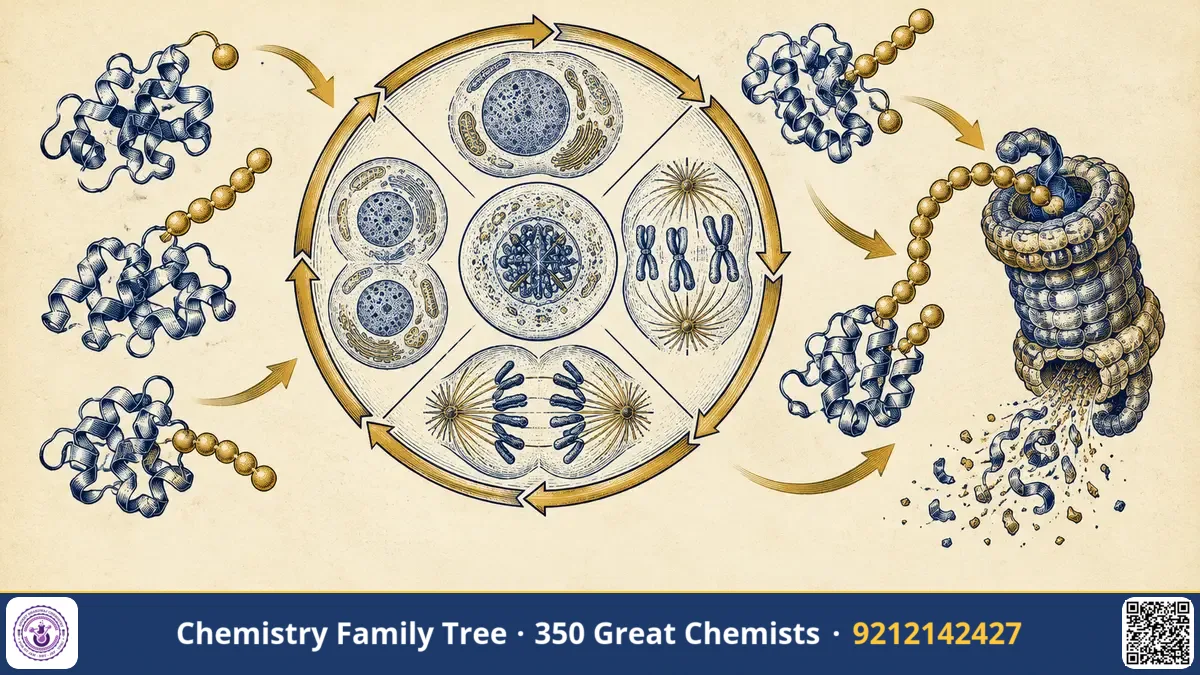
- Tagged proteins are destroyed. The conjugates were rapidly degraded, and free APF-1 was released again.
- APF-1 is identified as ubiquitin. Soon after the conjugation was characterised, APF-1 was recognised as ubiquitin, a protein first identified in 1975.
Notice the logic. Each result raised the next question. A 1980 paper from the same group describes step 3 in its title: ATP-dependent conjugation of reticulocyte proteins with the polypeptide required for protein degradation.
What ubiquitin does, in plain words
Ubiquitin is a small protein of 8.6 kDa found in eukaryotic cells, which are cells with a nucleus. The name comes from "ubiquitous", meaning found everywhere. Adding ubiquitin to another protein is called ubiquitylation.
Three kinds of enzymes work one after another:
- E1, the activating enzyme, activates ubiquitin.
- E2, the conjugating enzyme, carries it.
- E3, the ligase, joins it to the target protein.
The first ubiquitin is most often bound to a lysine residue of the target through an isopeptide bond. A lysine residue is the part of the protein that came from the amino acid lysine. More ubiquitin molecules are then added, and a chain forms.
The position of the link in the chain matters. Chains built on certain defined lysines are the ones related to degradation by the proteasome, the cell's protein-degrading machine. The source calls this the "molecular kiss of death". Chains built on other positions, and single ubiquitins, may instead regulate inflammation, DNA repair, translation and the movement of proteins inside the cell. So ubiquitin is not only a death tag. It is better read as a signal whose meaning depends on how it is attached.
Lysosomal and ubiquitin routes compared
| Feature | Lysosome route | Ubiquitin–proteasome route |
|---|---|---|
| Where breakdown happens | Inside the lysosome, using digestive enzymes | At the proteasome |
| How a target is marked | No ubiquitin tag involved | A ubiquitin chain added by E1, E2 and E3 |
| Energy in the extract work | Not the focus of that work | ATP-dependent |
| Fate of the tag | Not applicable | Free ubiquitin is released and reused |
Use this table as a revision aid. If an exam asks why the discovery mattered, write that selection by a tag explains how a cell can destroy one protein and leave others alone.
How to find Ciechanover's mentors on the family tree
The Chemistry Family Tree has a Find a chemist box. Type a name, such as "Ciechanover", and open his page. Every chemist page lists teachers, students, a discovery post and a biography.
Here is what to do, and why:
- Read the teachers section. His doctorate in biochemistry was awarded in 1981 at the Technion. He then did postdoctoral research in the laboratory of Harvey Lodish at the Whitehead Institute at MIT, from 1981 to 1984. Mentors are easier to remember when you attach them to a place and a period.
- Search the co-workers. Type "Hershko" and "Rose" and compare their pages. The site says it includes only well-established links, so some chemists appear without teachers. A missing link does not mean there was no mentor.
- Try the Longest lineage control. It is on the home page next to Surprise me. Use it to explore teacher-to-student chains and place a discovery in a wider story.
Make this a habit. In a viva or an interview, a discovery is easier to explain when you know who worked with whom.
Recognition
Ciechanover received the Albert Lasker Award for Basic Medical Research in 2000 and the Israel Prize for biology in 2003. In 2004, he shared the Nobel Prize in Chemistry with Avram Hershko and Irwin Rose for the discovery of ubiquitin-mediated protein degradation. The ubiquitin-proteasome pathway has a critical role in maintaining the homeostasis of cells, that is, keeping their internal conditions balanced.
He is described as an Israeli biologist, yet the prize was in Chemistry. That is a good reminder for UG students: the boundary between chemistry and biology is thin, and the chemical bond between a tag and a protein is what sits at the centre of this story.
Key takeaways
- The puzzle was an ATP-dependent protein breakdown system that works outside the lysosome.
- APF-1, a heat-stable polypeptide, attached to target proteins in chains and was then identified as ubiquitin.
- E1, E2 and E3 enzymes add ubiquitin; chains on certain defined lysines send proteins to the proteasome.
- Use Find a chemist to trace teachers and co-workers. A missing link only means the link is not listed.
Frequently asked questions
What did Ciechanover discover?
With Hershko and Rose, he characterised how cells mark proteins with ubiquitin chains so that they are degraded and recycled by the proteasome.
What is APF-1?
It is ATP-dependent proteolysis factor 1, a heat-stable polypeptide found in cell extracts. It was later identified as ubiquitin.
Does every ubiquitin tag mean destruction?
No. Only polyubiquitylation on defined lysines is related to proteasome breakdown. Other chains and single ubiquitins may regulate inflammation, DNA repair, translation and protein movement.
When was the Nobel Prize given?
It was awarded in 2004 in Chemistry, even though Ciechanover is described as a biologist.
What to do next. Try it yourself on the page below.
Chemistry Family Tree — who taught whom among 350 great chemists →